
Wooden Walking Canes: Styles, Wood Types, Care Tips, and How to Choose
Wooden Walking Canes: Styles, Wood Types, Care Tips, and How to Choose
A one-inch error in cane height can cause hip and shoulder pain within days for many users. Wooden walking canes are mobility aids that combine structural support with wood-specific durability and style. This feature-deep-dive compares styles, wood types, care tips, and buying considerations so shoppers pick canes for commuting, hiking, or gifting. Better Canes Umbrellas (Better Canes & Umbrellas Inc.), founded in 2000 in Chatham, NJ, expanded its walking stick selection in 2005 and offers commuter, hiking, and novelty canes. Our site emphasizes practical pieces that match daily mobility needs and collectible options that work as gifts. Next, see which woods resist outdoor wear, which finishes hide scratches, and which handles ease wrist strain.
What mobility and gifting problems do wooden walking canes solve?
Wooden walking canes are mobility aids that provide stability, posture support, and gift appeal. An ill-fitting cane raises fall risk and causes wrist, elbow, or back strain; for example, a cane set too short forces a user to lean and shifts weight to the opposite leg, increasing fatigue and trip risk. Better Canes Umbrellas reduces those costs by offering clear sizing guidance, handle-fit descriptions, and distinct categories for support versus novelty canes.
How does improper cane fit create safety and comfort problems? ⚠️
An improper cane fit increases fall risk and causes wrist, elbow, or back strain. A cane that is more than 1 inch too short forces forward lean and transfers load to the opposite hip, which increases fatigue and the chance of a misstep. Measurable fit errors to check include height off by more than 1 inch, using a cane designed for the wrong hand, handle diameter that is too large or too small for the user’s grip, and a worn or hardened tip that reduces traction. Those issues drive returns, extra customer service contacts, and warranty claims when buyers expect a support device but receive a decorative item.
⚠️ Warning: Measure cane height from the wrist crease to the floor while standing upright; a mismatch greater than 1 inch materially raises fall risk.
Better Canes Umbrellas highlights measurement steps and marks which models are adjustable or come with sizing charts so buyers avoid sizing mistakes before purchase.
Which buyer needs favor stability over style? 🧑🦽
Buyers who have balance impairment, neuropathy, frequent stair navigation, or daily long walks should prioritize stability and load capacity over decorative features. Objective indicators include reliance on the cane for stand-to-walk transitions, regular outdoor or uneven-surface use, recurrent near-falls, and medical advice recommending a walking aid. Match those indicators to cane attributes: choose solid shafts (hickory, oak, or reinforced hardwood), ergonomic handles (Derby or pistol grips for pressure distribution), non-slip rubber tips, and models with a published load rating. For example, a commuter who walks two miles daily and navigates stairs needs a different shaft stiffness and tip than someone buying a cane for occasional support.
Better Canes Umbrellas separates heavy-duty support models from novelty options and lists handle type, recommended use cases, and tip specs so buyers reduce safety incidents and warranty returns by selecting the right level of support.
How do gift and collectible canes differ from daily-use canes? 🎁
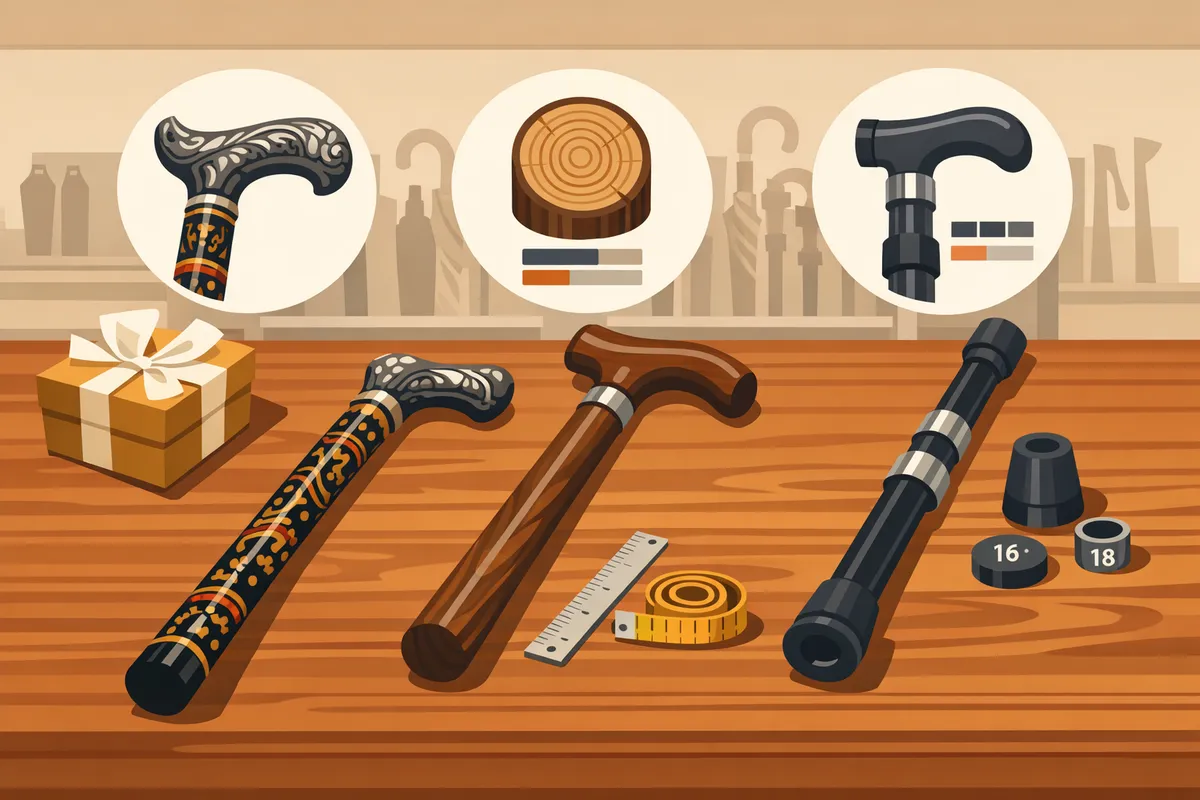
Gift and collectible canes emphasize finish, novelty handles, and presentation rather than heavy-duty construction. These pieces often feature decorative finishes, silver- or brass-plated handles, or carved motifs intended for display or occasional use; they may not include reinforced shafts, load ratings, or anti-slip tips required for everyday mobility. Use a novelty cane for costume, display, or occasional short walks, and choose a rated walking cane when the recipient depends on it for daily support. For buyers seeking options across purposes, the best wooden walking canes for men and women collections should clearly separate decorative flair from practical support so shoppers pick an item that matches the recipient’s needs.
Better Canes Umbrellas lists gift packaging and presentation details for collectible sticks and keeps daily-use models in a dedicated category with strength and fit information to prevent mis-purchases.
What features should you evaluate in wooden walking canes?
Evaluate handle design, wood species, shaft construction, tip type, and rated weight capacity before buying a wooden walking cane. These five criteria determine comfort, safety, longevity, and whether a cane suits daily support or occasional use. Better Canes Umbrellas stocks options across these categories so buyers can compare trade-offs without guesswork.
Which handle types matter and how do they compare? 🪑
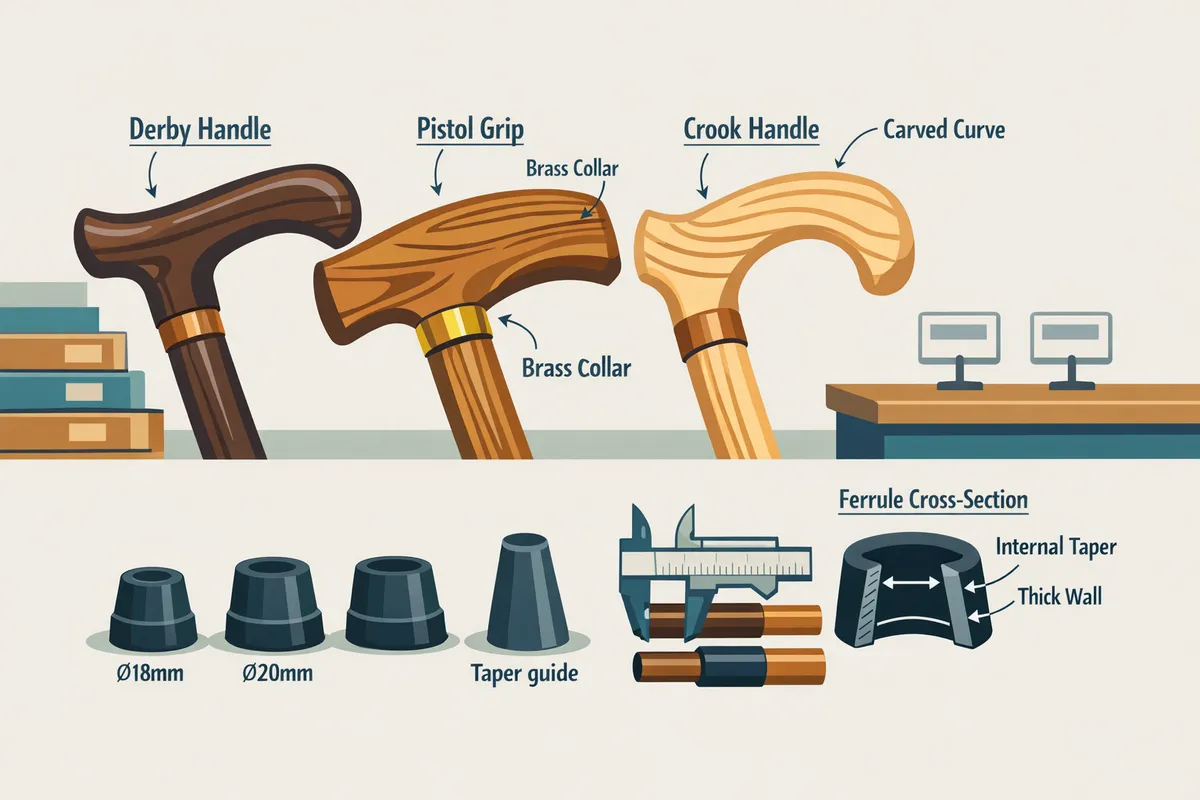
Derby, crook, and pistol grips distribute load differently and suit distinct user needs. Derby grips shift pressure into the palm and often improve wrist alignment; they fit users who need wrist stability while walking. Crook handles are easiest to hook over an arm or chair, which helps commuters and shoppers who frequently set a cane down. Pistol grips concentrate support under the heel of the hand and reduce hotspot pain during long standing periods; they suit people who need continuous stance support. Fit signals that favor one type include persistent wrist pain (choose Derby), frequent chair/coat hooking (choose crook), and long standing shifts at work or events (choose pistol). Better Canes Umbrellas lists clear grip photos and hand-size recommendations so buyers can match handle shape to real-world use.
Which wood species best balances strength, weight, and finish?
Choose a wood species by balancing density, finish behavior, and aesthetic goals; maple and oak prioritize strength while walnut and cherry make better dress pieces. Below is a compact comparison to guide selection.
| Species | Strength (relative) | Weight | Typical finish | Aesthetic notes | Cost (relative) |
|---|---|---|---|---|---|
| Maple | High | Moderate | Stains and clear lacquer well | Clean, light grain; good for everyday use | Moderate |
| Oak | Very high | Heavier | Penetrating oils, stain | Prominent grain, durable for active users | Moderate |
| Walnut | High | Moderate-light | Oil and wax highlight grain | Rich brown tones, dressy look | Higher |
| Cherry | Moderate | Light-moderate | Darkens with age, lacquer | Warm reddish hue, collectible appeal | Higher |
| Teak (exotic) | Very high | Heavier | Oils preserve natural oils | Weather-resistant, distinctive grain | Premium |
For a daily support cane choose denser species like maple or oak for durability under repeated loading. For the best wooden walking canes for men and women who want a dress or gift piece, walnut and cherry often match wardrobe tones while staying strong. Better Canes Umbrellas labels species and recommended use on each product page to speed comparison shopping.
Handcrafted wood canes with ergonomic handles 🔨
Handcrafted wood canes with ergonomic handles is a product category that pairs artisan woodworking with sculpted grips to reduce hand pressure. Artisans carve or bend the grip profile to follow a user’s palm contours and then finish the surface to limit hotspots. Benefits include fewer pressure points during long walks, improved balance through tuned grip geometry, and a more personalized fit for people with arthritis or neuropathy. Trade-offs include higher upfront cost, the need for careful humidity control to avoid shrinkage, and longer lead times for custom orders. Better Canes Umbrellas curates handcrafted options and lists hand measurements, grip width, and recommended use so buyers can find ergonomic models without a fitting appointment.
How important are tips, ferrules, and fittings for safety? ⚠️
Tip material and condition directly determine slip resistance and the cane’s service life. Rubber ferrules give the best grip on wet pavement and indoor tile but wear faster; metal ferrules last on gravel but reduce traction on smooth floors. Replace rubber ferrules when the tread pattern is less than 2 mm deep, when the cane wobbles, or when you hear clacking on hard surfaces. Frequency varies: urban commuters often replace rubber tips every 6 to 12 months; occasional users may need replacement every 18–24 months. Better Canes Umbrellas sells replacement ferrules and offers guidance on matching tip diameter and taper so customers avoid ill-fitting replacements.
💡 Tip: Keep a spare rubber ferrule in your bag. Replacing a worn tip immediately prevents shaft damage and reduces fall risk.
How do real buyers use wooden canes across commuting, daily support, and gifting?
Different buyers match wooden walking canes to commuting, daily support, hiking, or gifting by prioritizing weight, tip type, handle shape, and finish. These trade-offs determine convenience, safety, and longevity for each use case. The examples below pair buyer profiles with recommended picks from our Better Canes Umbrellas collection and explain practical compromises.
Commuter and city use: which features speed daily convenience? 🚶♂️
Commuter buyers pick wooden walking canes that prioritize light weight, compact storage, and a tip that grips wet sidewalks. Our compact folding and slim-shaft pieces in the Better Canes Umbrellas assortment suit subway, bus, and cafe use because they fold or slip under a seat and weigh noticeably less than a solid shaft cane. Choose low-profile Derby or crook handles for quick handoffs between sitting and standing; these handles rest naturally on a chair arm or in a hand without awkward repositioning.
Common trade-offs: collapsible models sacrifice some dress polish and may need occasional hinge checks, while slim shafts trade a bit of shock damping for portability. For wet-weather commuters, upgrade to an all-season rubber tip and carry a small tip repair kit in a commuter bag.
Daily mobility for older adults: what to prioritize for safety? 🪑
Daily-use buyers prioritize stable handle geometry, a rated weight capacity, and an easy-to-grip tip to reduce fall risk. A Derby or ergonomic handle spreads load across the palm and lowers wrist torque. Our handcrafted wood canes with ergonomic handles in the Better Canes Umbrellas line pair comfortable grip shapes with hardwood shafts that resist daily wear.
Maintenance schedule: inspect the rubber tip monthly and replace it at the first sign of uneven wear. Check fittings and ferrules every 3 to 6 months, depending on daily use. Picking a cane with a published weight rating reduces long-term care costs by lowering the chance of sudden failure; poorly rated or decorative-only canes increase replacement and medical risk.
💡 Tip: Measure cane height by standing upright and having a friend measure from wrist crease to floor; that number is the target cane length for safe posture.
Hiking and outdoor walking sticks: when to prefer reinforced shafts? 🥾
Outdoor buyers prefer reinforced shafts, straight-grain woods, and all-weather finishes to handle trail impact and moisture. Woods such as hickory and ash resist shock and splintering; Better Canes Umbrellas offers reinforced hiking sticks and weather-sealed finishes designed for repeated trail use. For rugged terrain, choose a cane with a steel or composite core or a thicker-diameter shaft to resist bending.
Tip and boot upgrades matter: replace dress tips with tungsten or carbide-tipped boots for rock traction, or use removable rubber overshoes for pavement sections. Contrast with dress canes: hiking sticks trade refined aesthetics and lacquered finishes for durability and easy-to-repair tip systems.
Gifts and novelty canes: how to choose a memorable yet practical piece? 🎁
Gift buyers balance presentation, secure fittings, and personalization so the cane looks special and remains usable. Our Better Canes Umbrellas novelty and collectible range includes carved handles, inlaid veneers, and lacquered finishes that photograph well and ship in gift-ready packaging. Select a model with a solid ferrule and machine-sanded shaft to avoid loosening after polish or engraving.
Budget and options: for under-$100 gifts choose a polished hardwood with a classic Derby handle; midrange buyers often choose handcrafted wood canes with ergonomic handles and simple engraving; collectors may opt for limited-run carved sticks with certificate-style packaging. Offer the recipient a return or fitting exchange to avoid the common pitfall of the wrong height or an uncomfortable grip.
What care, sizing, and buying steps ensure you choose the right wooden cane?
Proper measurement, routine maintenance, and a focused pre-purchase checklist prevent returns, safety incidents, and premature wear. Follow step-by-step sizing, monthly and annual care routines, and a buyer checklist that verifies weight rating, handle orientation, tip availability, and warranty before you buy.
How to measure cane height and test fit in five steps 🧭
Measure from the floor to the wrist crease with your arm relaxed to determine the correct cane height. 1) Stand upright in your normal shoes and let your arms hang naturally. 2) Have a helper mark the wrist crease or use a measuring tape from floor to wrist. 3) Subtract any handle offset listed on the product page (for example, 1 to 2 inches for offset grips) to get finished shaft length. 4) Test the cane by walking 20 to 30 steps; confirm comfort and balance. 5) Check elbow angle: a 15 degree bend at the elbow while holding the cane is the target. If two users share a cane, measure both and keep a written note of the correct setting to avoid mismatches.
Our Better Canes Umbrellas product pages list handle offset and shaft specs so you can apply these steps directly to each model, including handcrafted wood canes with ergonomic handles.
What care routines prevent cracking and finish failure? 🌿
Regular cleaning, humidity control, and periodic oiling or waxing prevent wood cracking and finish failure. Clean monthly with a soft cloth and mild soap; avoid soaking the wood. Keep storage humidity around 40 to 60 percent and away from direct heat or damp basements; rapid swings in humidity cause cracking and finish check. For finished canes, do a surface inspection every six months; for unfinished or oiled shafts, apply a thin coat of natural oil or paste wax once per year to restore moisture and surface protection. Wipe metal ferrules dry after wet use to prevent corrosion at the junction.
⚠️ Warning: Do not store wooden canes leaning against radiators or in non-climate-controlled attics. Heat and dampness accelerate splitting and finish failure.
Our product listings note recommended finishes and care steps for each wood species so you know whether a cane needs annual oiling or only light cleaning.
Which buying checklist items reduce returns and risk? ✅
Confirm weight rating, handle orientation, tip replacement availability, return policy, and warranty before purchase to reduce returns and safety issues. Check the rated load on the product page and compare it to the user’s typical weight plus a safety margin. Verify handle orientation (left or right hand offset) and grip style—pistol, Derby, or crook—so daily use stays comfortable. Ensure replacement tips and ferrules are sold separately or included; a missing tip increases slip risk and causes emergency returns. Review the return window, restocking terms, and warranty coverage for structural defects.
According to Better Canes Umbrellas product descriptions, each listing shows rated weight, tip type, and warranty details to make side-by-side comparisons easy when choosing the best wooden walking canes for men and women.
When should you choose Better Canes Umbrellas over a DIY or custom build? 🛍️
Choose Better Canes Umbrellas when you want documented fit, reliable construction, and fast post-sale support instead of spending hours on a DIY build. Buying our curated collection saves time and reduces the chance of an incorrect height or weak joint that can cause wrist, shoulder, or hip pain. Our selection includes handcrafted wood canes with ergonomic handles and clear product pages that list weight ratings, handle offsets, and replacement parts. For example, a commuter who needs a lightweight cane for daily use avoids weeks of trial-and-error by selecting a model with a specified shaft diameter and tip type. We offer customer service and warranty information so shoppers can resolve fit or defect issues quickly; Better Canes Umbrellas has supported buyers since 2000.
Frequently Asked Questions
This FAQ answers the buyer's most common questions about handle comfort, sizing, outdoor suitability, care, weight limits, and personalization for wooden walking canes. Use these answers to compare options quickly and finalize a purchase that matches daily use, terrain, and gifting needs. Each reply points to practical checks you can do in store or at home and how Better Canes Umbrellas supports those choices.
Which wooden cane handle is most comfortable for long use? 🖐️
Pistol and anatomically shaped ergonomic handles typically provide the best long-term comfort by spreading pressure across the palm. Pistol handle is a handle type that curves forward with a broad surface to rest in the palm; anatomically shaped ergonomic handles are contoured to follow the hand's natural profile. These designs reduce focal pressure on the metacarpal pad and often lower wrist extension, which helps users who walk for long periods or suffer mild neuropathy. Try holding a candidate cane for five minutes and take a short indoor walk to feel pressure distribution; Better Canes Umbrellas' handcrafted ergonomic models are available to test in store or order with a simple return option.
How do I size a walking cane correctly for my height? 📏
Measure from the floor to your wrist crease while standing with arms relaxed to determine the correct cane length. After measuring, verify comfort by checking for a roughly 15-degree elbow bend when the cane tip is aligned with your foot and by taking a short, natural-pace walk. For adjustable canes, set length in 1/2- to 1-inch increments until the elbow angle and gait feel right; fixed-shaft buyers should match their measurement to the closest stocked length. Better Canes Umbrellas lists recommended shaft lengths and offers adjustable models that let commuters fine-tune fit without returning the cane.
Are wooden canes suitable for outdoor hiking and uneven terrain? 🌲
Some wooden walking canes are suitable for outdoor trails when they use dense, shock-resistant woods and rugged tips. Check for reinforced shafts, a weatherproof finish, and a replaceable ferrule or carbide tip; these features reduce shaft flex and improve grip on gravel, roots, or slick rock. Reserve a dedicated hiking stick when you carry a heavy pack, cross steep grades, or expect prolonged uphill work—the higher dynamic loads exceed what most fashion or everyday canes are built to handle. Better Canes Umbrellas separates hiking sticks and novelty canes in our catalog so you can choose models rated for trail use rather than general commuting.
How do I care for a wooden cane to prevent cracking or finish wear? 🧴
Prevent cracking by avoiding extreme humidity swings, cleaning with a damp cloth, and applying wax or oil following the manufacturer's guidance. Perform a monthly wipe-down, reapply a thin coat of beeswax polish or tung oil once or twice a year depending on use, and store the cane vertically away from direct heat and sunlight to stabilize the wood's moisture. Watch for signs of damage: hairline surface cracks, a loose ferrule, or a splintered finish—any of these merit tip replacement or professional refinishing before the cane bears full load again. Better Canes Umbrellas provides care instructions for each wood species and can advise on refinishing or tip replacement timelines.
What weight limit should I check before buying a wooden cane? ⚖️
Check the cane's rated weight capacity and select a model with at least a 20% safety margin above the user's body weight. Dynamic loads during walking and occasional stumbling exceed static body weight, so a 200-pound user should choose a cane rated for roughly 240 pounds or more to reduce failure risk. For daily, load-bearing use choose heavy-duty shafts (denser wood or reinforced cores) and models that explicitly list higher capacities; these options reduce the chance of shaft fracture or tip failure.
⚠️ Warning: Using a cane with insufficient rated capacity increases the risk of sudden failure and injury. Always verify the rating on the product page and inspect the cane regularly for wear.
Better Canes Umbrellas highlights rated capacities on product pages and offers higher-capacity options for frequent load-bearing users.
Do you offer customization, engraving, or personalized gift packaging? 🎁
Better Canes Umbrellas offers select personalization, engraving, and gift-packaging options on many models in our collection. Typical customizations include laser or hand engraving on the shaft or metal collar, choice of ribboned gift boxes, and simple handle-fit adjustments; lead times vary by option but usually range from several business days to two weeks for engraving and packaging. Request engraving during checkout or contact customer service with your order number to confirm character limits, placement, and any extra fees; we will confirm a delivery window before finalizing the order. For gift purchases, specify special packaging at checkout and note that customized items may have different return or exchange policies.
Next steps for choosing a walking cane
Match the cane's style, wood type, and handle to how you will use it. Focus on comfort, durability, and daily use rather than trends. Test a few options for weight, grip, and balance so you avoid buyer's remorse and extra trips to return unsuitable pieces. For most shoppers, trying models in person clarifies choices faster than photos alone; this matters especially with wooden walking canes where grain, finish, and feel differ by species. Better Canes & Umbrellas Inc., founded in 2000 and based in Chatham, NJ, is an online and retail seller focused on umbrellas, walking sticks (including novelty sticks and hiking sticks), and shoe horns. They emphasize variety across commuter, supportive, and collectible canes so you can match mobility needs with personal style. Schedule a consultation with Better Canes Umbrellas to compare suitable woods and handle styles and get a personalized fit recommendation. Book a short session to bring measurements and use-case details so the consultant can point you straight to the best options.