
Weather Protection Umbrellas: 2026 Complete Guide to Windproof, Travel, Golf, and Kids Options
Weather Protection Umbrellas: 2026 Complete Guide to Windproof, Travel, Golf, and Kids Options
A sudden gust can split a cheap canopy in minutes, leaving a commuter soaked and late for work. Weather protection umbrellas are consumer products that shield users from rain, wind, sun, and severe weather through reinforced frames, vented canopies, and compact designs.
This beginner's guide shows how to choose and care for umbrellas that protect against rain, wind, sun, and severe weather, covering windproof, travel, golf, and kids options. Better Canes & Umbrellas Inc., founded in 2000 in Chatham, NJ, operates as Better Canes Umbrellas and sells umbrellas, walking sticks, and shoe horns online and in-store. Part of our Umbrellas: Windproof & Travel series, this guide starts from zero and shows practical checks and care tips so you can tell which compact model survives a Nor'easter.
What is a weather protection umbrella and which specs matter?
A weather protection umbrella is a portable canopy that blocks rain and UV while resisting wind; the specs that matter are UPF rating, canopy fabric and coating, frame design, venting, canopy size, weight, and folded length. These specs determine whether an umbrella performs for a daily commute, a beach day, a golf round, or as an umbrella for severe weather. Understanding each spec helps you match a model to the real-world conditions you face and avoid repeated purchases.
What does UPF and fabric coating mean? ☀️
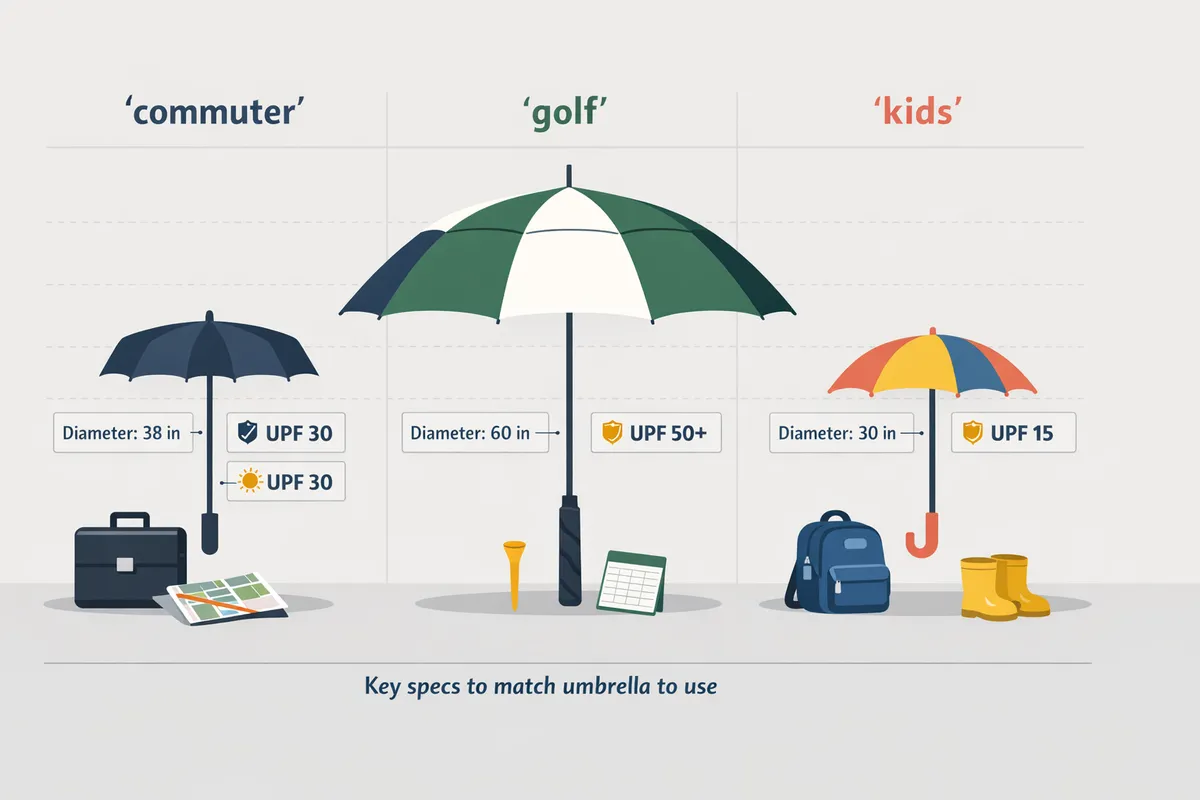
UPF rating is a measure that shows how much ultraviolet radiation a fabric blocks. UPF stands for Ultraviolet Protection Factor and appears on labels as a number (for example, UPF 15, 30, or 50+). Common ranges: UPF 15–30 provides everyday protection, UPF 25–39 gives good protection for prolonged outdoor time, and UPF 40–50+ indicates very high protection suitable for beach or high-exposure use.
Fabric coatings alter UV and water behavior. Dyed fabric is colored and relies on tight weave and pigment to block rays. Laminated fabrics have a thin polymer backing that increases UV blocking and water resistance. Brand-treated fabrics (seen as names like SunGuard, Solarblok, or Solarteck) are marketing terms for additional coatings or weave treatments.
For example, a label that reads UPF 50+, polyester with PU lamination tells you both the protection rating and that a laminated backing adds water and UV resistance. Prioritize UPF when the primary need is sun protection; choose laminated or coated fabrics when you need combined sun and rain performance.
💡 Tip: Check the UPF number and the care instructions on the tag; frequent machine washing and bleach can reduce coating performance over time. Better Canes Umbrellas shows UPF and fabric-coating details on product pages so you can pick beach or commute models quickly.
How do frame design and venting affect wind performance? 🌬️
Frame design and venting determine how an umbrella handles gusts and resists inversion. Single-rib is a frame type that has one rib per canopy section and usually folds simpler but resists sideways gusts less effectively. Multi-rib is a frame type that uses extra ribs and spreaders to keep the canopy shape under load. Vented canopy is a canopy design that includes overlapping layers or purpose-built vents that let wind pass through to reduce lift.
Materials change the trade-off between flexibility and stiffness. Compare the common materials:
| Material | Characteristic | Durability | Weight | Best for |
|---|---|---|---|---|
| Fiberglass | Flexible, snaps back after bending | High resistance to fracture | Light | Windy commutes, regular use |
| Steel | Very stiff, resists deformation short-term | Can bend and corrode over time | Heavy | Budget umbrellas, heavy rain use |
| Aluminum | Corrosion-resistant, light shaft | Joints can fatigue under repeated stress | Very light | Travel and compact models |
Fiberglass ribs flex instead of breaking, which reduces inversion risk in gusts. Stiffer steel frames hold shape but can bend permanently or rust. Aluminum keeps weight down but requires reinforced joints for long-term durability. Vented or double-canopy designs let pressure escape and cut the chance of the canopy flipping inside out.
⚠️ Warning: No handheld umbrella is safe in sustained gale-force winds; in severe conditions choose shelter rather than relying on an umbrella. Better Canes Umbrellas lists vented and reinforced-frame models intended for windy routes and golf courses to reduce replacements and commute delays.
How should I read size, weight, and folded length specs? 📏
Canopy diameter, folded length, and weight directly determine coverage and portability. Canopy diameter converts to coverage: a 36–38-inch canopy typically covers head and shoulders for one adult; a 48–60-inch canopy covers most of an adult's torso and can shelter two people standing close; a 60+ inch canopy is what golfers use for full-body and equipment protection.
Use measured examples to set expectations. For example, a commuter compact might list a 42-inch canopy, a 12–13.5-inch folded length, and weigh roughly 12–14 ounces; a golf umbrella often lists a 60-inch canopy, a 34-inch shaft, and weighs 1.5–2.5 pounds. If you carry the umbrella in a bag, prioritize folded length under 14 inches and weight under 14 ounces. If you need an umbrella for severe weather, prioritize canopy diameter and a reinforced shaft over minimal weight.
Handle style affects comfort and how you carry the umbrella. A hooked handle sits over an arm or bag strap and makes hands-free carry easier; a straight rubberized handle can offer a more secure grip in wet conditions but adds little to compactness. Better Canes Umbrellas presents folded length, canopy diameter, and weight on each product listing so you can compare commuter, travel, golf, and kids sizes before buying.
Which umbrella types fit my use case: commuter, travel, golf, or kids?
Pick a commuter umbrella for compact daily carry, a windproof travel umbrella for packing light, a golf umbrella for wide coverage and shaft strength, and a kids umbrella for scaled safety features. Each use case trades off folded length, weight, canopy area, and frame strength, so matching features to daily pain points prevents wasted purchases and broken gear. Below are practical checklists and buying tips tied to what Better Canes Umbrellas stocks for each need.
Best commuter umbrellas for daily carry 🚇
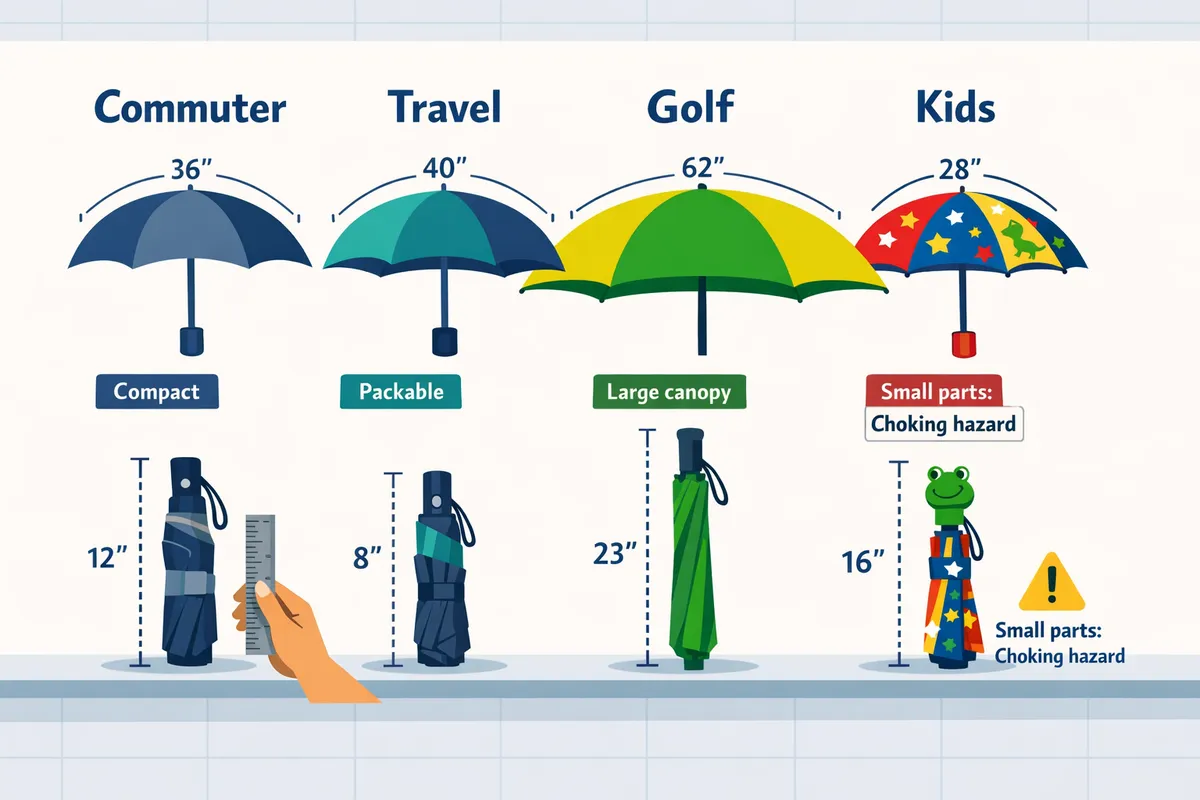
Commuter umbrellas work best when they keep folded length under about 12 inches while using a durable frame and a reliable open/close action. Aim for a compact model that fits in a tote or briefcase but has enough canopy to block splash from transit platforms. Practical checklist:
- Folded length: under 12 inches (about 30 cm).
- Canopy size: 38–44 inches (96–112 cm) for standing and crowded transit.
- Open/close: one-button automatic or simple manual with smooth action.
- Grip: comfortable, non-slip handle for brisk walks and crowded handholds.
- Sleeve or case: protective sleeve to avoid wetting bags.
Better Canes Umbrellas carries commuter styles that trade minimal folded length for sturdier ribs than typical pocket umbrellas, lowering the chance you replace a broken canopy mid-season.
Windproof travel umbrellas that pack small ✈️
Windproof travel umbrellas prioritize a short folded length, low weight, and reinforced ribs to resist gusts while stowed. Reinforced ribs are a frame component that uses thicker metal or composite materials to resist bending under gusts. Vented canopy is a canopy design that allows air to pass through overlapping layers to reduce inversion. Travel buying priorities:
- Folded length: under 11 inches for carry-on or daypack pockets.
- Weight: the lighter the better, but avoid ultra-light flimsy builds.
- Frame: reinforced ribs and a sturdy shaft to handle crosswinds.
- Case: a protective sleeve to keep the fabric dry in luggage.
Tip: Check product reviews and manufacturing descriptions for real gust tests; open and close the umbrella in-store and twist the shaft gently to judge stiffness before buying.
Better Canes Umbrellas lists windproof travel umbrellas with protective sleeves and reinforced ribs so you avoid repeated replacements after a single windy trip. Use the windproof travel umbrellas keyword when searching product pages to surface models built for gust resistance.
Golf umbrellas for coverage and stability ⛳
Golf umbrellas focus on large canopy diameter (typically 60–70 inches) and stiff shafts to shield players walking between holes. Vented double-canopy is a canopy type that uses two overlapping layers so wind passes through the top layer and reduces inversion risk. Golf buying checklist:
- Canopy diameter: 60–70 inches (152–178 cm) for two people or a bag.
- Shaft: stiff materials (steel, fiberglass blends) that resist bending in sustained wind.
- Handle: comfortable long handle for one-handed carry between shots.
- Wind features: double-canopy or vented designs to shed gusts without flipping.
For an umbrella for severe weather while on the course, prioritize vented double-canopy and a reinforced shaft over weight savings. Better Canes Umbrellas carries large-canopy golf models with rigid shafts that minimize soaked clubs and lost strokes from soggy gear.
Kids and family umbrellas for safety and size 🧒
Kids umbrellas should match a child's height and include rounded tips, pinch-free sliders, and easy mechanisms for safe use. Practical specifics:
- Canopy diameter: 20–28 inches (50–71 cm) appropriate for toddlers to early teens.
- Mechanism: manual open or slow-automatic that avoids fast snaps.
- Tips: rounded or covered tips and blunt ribs to prevent eye injuries.
- Visibility: bright colors or reflective panels for road-crossing safety.
- Weight: very light handles and short shafts sized to the child's reach.
⚠️ Warning: Avoid umbrellas with small detachable parts or loose decorations that could pose choking hazards for young children.
Better Canes Umbrellas includes children’s patterns and novelty styles that match school colors or family outings, letting caregivers choose safe, sized gear without hunting multiple specialty shops.
How to pick, test, and buy a weather protection umbrella without wasting money?
Use a short, hands-on process: check specs, run a quick wind test, and confirm warranty and return terms before you buy. Our website groups windproof travel umbrellas and other models by use case so you can compare viable options without guesswork.
A practical buyer's checklist ✅
Check canopy material, UPF, frame type, venting, folded length, weight, handle grip, and warranty before purchasing. UPF is a fabric rating that shows how much ultraviolet radiation the canopy blocks; choose UPF 50+ for robust sun protection in beach or high-UV settings. Prefer frames labeled steel, fiberglass, or hybrid; steel adds strength for golf and severe weather, fiberglass gives better flex for windproof travel umbrellas, and hybrids balance weight and durability. For commuting, aim for folded length under 12 inches and weight under 18 ounces. For golf or storm use, pick canopy diameters 42 inches or larger and a reinforced shaft.
Tip: Open and flex an umbrella in a quick in-store wind test to feel frame resilience before purchasing.
Avoid the hidden business cost of repeated mismatches: returns cost time and shipping, and replacing an undersized umbrella can leave employees or customers unprotected on critical days. For example, frequent short commutes favor lightweight compact models; daily outdoor work favors heavier frames that reduce replacement frequency.
Comparison table: top picks at a glance 🌦️
Use a compact table listing UPF, weight, canopy size, frame material, and wind performance to match a model to your use case. Our website curates representative commuter, travel, golf, and kids picks so you can scan trade-offs quickly.
| Model (example) | Use case | UPF | Weight | Canopy size | Frame material | Wind performance |
|---|---|---|---|---|---|---|
| Commuter Compact | Daily carry, public transit | 50+ | ~12 oz | 38 in | Aluminum | Good (light gusts) |
| Travel Windproof | Packing for trips | 50+ | ~14 oz | 40 in | Fiberglass | Very Good (gusty conditions) |
| Golf Shield | Fairways and long walks | 30–50 | 26–32 oz | 62–68 in | Steel / hybrid | Excellent (sturdy in sustained wind) |
| Kids Bright | School runs | 30–50 | 8–12 oz | 28–34 in | Lightweight steel | Fair (protected use) |
| All-Weather Sturdy | Severe weather focus | 50+ | 22–30 oz | 44–50 in | Reinforced hybrid | Very Good to Excellent |
Where to buy and what to expect from Better Canes Umbrellas 🛍️
Buy from Better Canes Umbrellas when you want curated options with clear return windows and care instructions on each product page. Better Canes & Umbrellas Inc., founded in 2000 and based in Chatham, NJ, lists commuter, travel, golf, and kids categories so shoppers can compare like for like. Our website shows fold length, canopy diameter, fabric specs, and recommended use on each product page. Expect a stated return window and care notes such as recommended drying and storage methods so you avoid premature canopy damage.
Ordering from a retailer with both online and retail presence reduces the risk of a poor fit because you can inspect similar models in store and confirm healing or replacement processes online. If a product page lacks explicit warranty or return details, contact customer service before purchase.
Warranty, returns, and when to pay more 💳
Prioritize warranties that explicitly cover frame breakage and canopy defects and pay more when build quality and warranty reduce replacement frequency. Fair return policies will state a clear return window (commonly 30 days) and any restocking fees; a warranty typically covers manufacturing defects but not accidental damage. Choose a higher-priced umbrella when you use it daily, live in windy coastal areas, or need a golf-sized canopy; the longer initial cost amortizes over years through fewer replacements. For example, an owner who replaces a 20-dollar cheap umbrella every year may break even by buying a 60-dollar midrange model that lasts 3 years under regular use.
How to care for and extend the life of your weather protection umbrella?
Regular drying, gentle cleaning, and prompt small repairs keep weather protection umbrellas functional and safe for longer. These routines prevent mold, preserve water repellency and UPF coatings, and reduce the chance of frame failure after storms. Follow the step-by-step care tips and the simple repair checklist below to get the most life from each umbrella.
Drying, storage, and routine cleaning 💧
Let umbrellas fully air-dry open and clean salt or grime promptly to prevent fabric breakdown and mold. 1) After use, open the umbrella and stand it upright in a ventilated area until fully dry. 2) For saltwater or sand exposure (common with beach use or an umbrella for severe weather near shorelines), rinse the frame and canopy with fresh water before drying. 3) Remove surface dirt with a soft cloth and mild soap; avoid bleach, strong detergents, or abrasive brushes that strip water-repellent coatings. 4) Once surface water is gone, fold loosely and store by hanging or in a breathable sleeve in a cool, dry place away from direct heat and sunlight.
Better Canes Umbrellas recommends inspecting the canopy seams and stitching after each heavy storm and wiping metal parts dry to limit corrosion.
💡 Tip: Use a soft-bristle brush and a mild dish soap solution for stubborn grime; always rinse and dry fully before collapsing the umbrella.
Minor repairs and when to take a model to a cobbler 🛠️
Small issues like detached tips, loose screws, or a popped rib often fix quickly at home; fractured shafts, permanently kinked ribs, or broken runner assemblies usually need professional attention or replacement. Common DIY fixes include:
- Replacing a ferrule or tip using a spare part kit.
- Realigning a popped rib by gently pushing the rib back into the runner and testing open/close action.
- Tightening loose screws on the runner or handle with a small screwdriver.
- Securing small canopy tears with outdoor fabric glue or a sewn patch for a temporary repair.
Repair decisions should factor labor time and part cost. For low-cost compact travel umbrellas, replacement often costs less than a complex repair. For mid- or high-priced Better Canes Umbrellas models, contact our customer service for spare-part availability and authorized repair recommendations before deciding to replace.
When to replace your umbrella and responsible disposal ♻️
Replace an umbrella when ribs bend beyond straightening, canopy tears multiply, or the fabric permanently loses water repellency despite cleaning. Signs you should replace include persistent leaks after rain, a wobbly or creaking shaft, automatic open/close failures, or fabric that flakes or separates from coating. If the umbrella fails structural safety checks after an impact in severe weather, replacement is the safer option.
Donate usable, gently worn umbrellas to shelters, community centers, or school programs so they serve someone else instead of entering landfill. For badly damaged umbrellas, separate materials where possible: remove the fabric from the metal frame. Reuse canopy fabric as drop cloths, garden shade, or packing material. Check local recycling rules for scrap metal collections before dropping off frames.
⚠️ Warning: Do not place coated canopy fabric or mixed-material frames in curbside paper recycling; contact your municipality for accepted textile or metal recycling streams.
If you purchased from Better Canes Umbrellas, check your purchase paperwork for warranty or spare-part options before disposal; our team can advise whether repair, part replacement, or recycling is the most cost-effective choice.
Frequently Asked Questions
These answers address the most common shopper concerns about protection, wind resistance, UV blocking, sizing, care, and warranty for weather protection umbrellas. Each response starts with a concise fact and follows with a short example or buying tip. Check model pages on Better Canes Umbrellas for exact specs, images, and model-specific return or warranty terms.
Are windproof travel umbrellas really worth it? 🌬️
Yes. Windproof travel umbrellas reduce the chance of inversion and last longer on windy commutes because they pair reinforced ribs with vented canopies and stronger joint construction. For many city commuters who face gusts from tunnels, buses, and open bridges, a travel model with reinforced ribs prevents the common split-rib failure that causes a late, wet arrival. Compare features in the table below before you buy.
| Feature | Windproof travel umbrella | Standard compact umbrella |
|---|---|---|
| Reinforced ribs | Single-piece or heat-treated ribs designed to flex and return | Thin, stamped ribs that bend or break under stress |
| Venting | Dual or offset vents that reduce inversion pressure | No venting; catches gusts like a sail |
| Folded length | Often 9–12 inches, tradeoff for sturdier frame | 7–9 inches, smallest size but weaker frame |
| Typical durability | Better for frequent windy use | Best for light rain and occasional gusts |
Tip: Prioritize reinforced ribs and venting for daily windy routes; check folded length against your bag before buying. Better Canes Umbrellas lists vented, reinforced travel models in the travel category so you can compare side by side.
Can I use a regular umbrella as an umbrella for severe weather? ⚠️
No. Only umbrellas built for severe weather, with heavy-duty frames, vented canopies, and larger shafts, reliably withstand sustained high winds and heavy rain. If you commute in coastal cities, ride a motorcycle, or expect storm conditions, choose a dedicated severe-weather or golf model rather than a standard compact umbrella to avoid repeated replacements and safety risks. Better Canes Umbrellas separates heavy-duty and golf umbrellas in the catalog so you can select models rated for stronger conditions and read the product notes on frame materials and recommended use.
How do I read UPF and what rating should I choose? ☀️
UPF is a fabric rating that indicates how much ultraviolet radiation the fabric blocks; higher numbers mean more protection. For short walks or incidental sun exposure, UPF 15–30 offers basic protection; for beach days, long outdoor events, or high-reflection environments like snow or water, UPF 30–50+ is preferable. Also consider canopy color and weave: darker, tighter-weave fabrics block more UV even at the same UPF rating. According to Better Canes Umbrellas product descriptions, UPF is listed alongside canopy material so you can match the rating to the intended use.
What size umbrella is best for commuting versus travel? 📐
A canopy diameter around 38–42 inches balances coverage for most adult commuters, while a folded length under 12 inches makes a travel umbrella fit in small carry-ons and backpacks. Example: an average adult walking between transit stops will stay drier with a 40-inch canopy that covers shoulders and a bag; a weekend traveler who needs space in a carry-on will prefer a 9–11 inch folded length even if the canopy is slightly smaller. Keep weight and handle shape in mind: wider canopies increase coverage but add weight and wind profile. Better Canes Umbrellas lists both canopy diameters and folded lengths on product pages to help you match size to purpose.
How often should I replace my umbrella? 🔁
Replace an umbrella when structural damage persists after cleaning and minor repairs or when the canopy leaks despite proper care. Visible signs that indicate replacement include bent or broken ribs that do not return after inversion, rusted or loose shaft joints, cracked handles, thinning or torn canopy fabric, and water penetration through the fabric after drying. For example, a commuter who repairs a broken rib twice in one season should plan to replace the unit to avoid repeated disruptions and replacement costs.
💡 Tip: Always fully dry umbrellas before storage to prevent mold, fabric delamination, and trapped odors.
Better Canes Umbrellas documents common warranty remedies on product pages and can advise whether repair, replacement, or return is appropriate for a given model.
Does Better Canes Umbrellas offer returns or warranty support? 🛍️
Better Canes Umbrellas provides model-specific return and warranty terms and a customer support team to handle post-purchase issues. Product pages list the applicable return window, warranty coverage, and any exclusions for each umbrella model. When you contact support, have your order number, photos of the issue, and a short description ready; this speeds claim handling and lets support recommend repair, exchange, or replacement based on the model and failure type.
Choose an umbrella that matches local weather risks and daily use.
Solid choices focus on build, canopy size, and how you carry it. This guide showed how frame materials, venting, and canopy shape affect wind resistance and sun coverage, so you can pick weather protection umbrellas that fit your routine. The cluster topic Umbrellas: Windproof & Travel covers compact commuters and full-size golf models to match those needs. Better Canes & Umbrellas Inc., founded in 2000 and based in Chatham, NJ, is an online and retail seller focused on umbrellas, walking sticks including novelty sticks and hiking sticks, and shoe horns, offering a broad assortment that blends fashion, function, and giftability.
Try items from Better Canes & Umbrellas by browsing commuter and windproof travel umbrellas and selecting the model you would test in your daily commute. Subscribe to the Better Canes newsletter for care tips, packing reminders, and model comparisons. Return to the catalog to complete your purchase once you know which features solve your needs.