
Stylish Walking Canes: 2026 Sizing & Style Guide (Handles, Petite/Tall Lengths, Cane Tips, and Outfit Pairings)
Stylish Walking Canes: 2026 Sizing & Style Guide (Handles, Petite/Tall Lengths, Cane Tips, and Outfit Pairings)
A wrong cane length can make walking harder and increase shoulder or back discomfort within days. Stylish walking canes are mobility accessories that pair reliable support with curated design details for daily use, commuting, and gifting. Better Canes Umbrellas, founded in 2000 and based in Chatham, NJ, stocks umbrellas, walking sticks (novelty and hiking), and shoe horns aimed at commuters, collectors, and practical gift buyers. In this 2026 Sizing & Style Guide our website covers correct sizing, handle shape and tip selection, material care, and outfit pairing so you avoid wasted hours and returns. Our website starts from zero and builds clear, actionable steps for beginners. Which handle shape suits petite frames, and which tip handles slick city pavements?
How do I choose the right size and length for stylish walking canes?
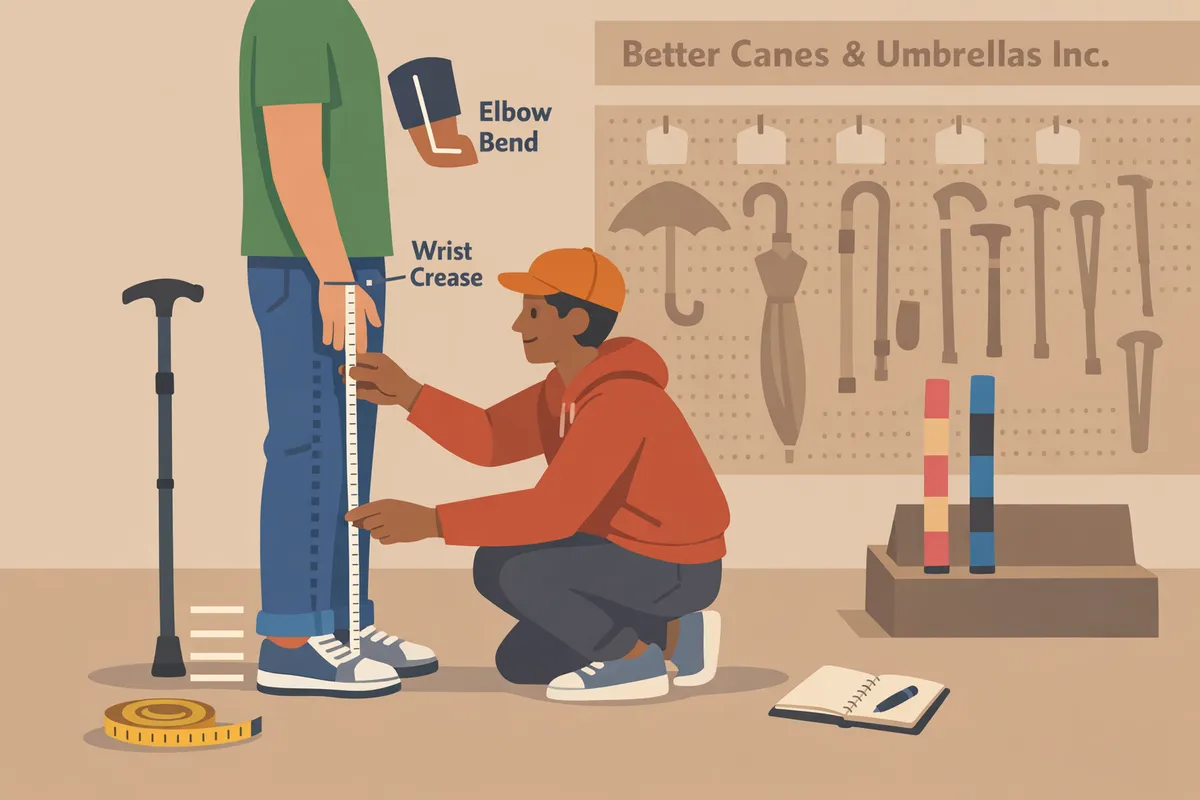
Measure from the floor to your wrist crease while standing in the shoes you usually wear; that measurement gives the correct cane length for most users. This ensures a neutral elbow bend and reduces shoulder or back strain when you walk. Better Canes Umbrellas offers adjustable models plus pre-cut petite and tall shafts to match precise measurements and fashion preferences.
Which measurements determine cane length? 📏
Cane length is the distance from the floor to your wrist crease measured while standing in your normal shoes. Required items: a tape measure, a partner to read the tape, and the shoes you plan to wear with the cane. Common measurement mistakes include measuring from the ankle instead of the wrist crease, measuring barefoot when you wear heels or thick soles, and rounding down when you should round up to the nearest available shaft length.
-
Required items:
- Tape measure (or a ruler and string)
- The shoes you'll normally wear
- A wall or chair for balance while measuring
-
Common mistakes:
- Measuring barefoot when you usually wear supportive shoes
- Reading the wrong landmark (heel, knee, or palm instead of wrist crease)
- Ignoring cuff or coat thickness that changes wrist position
💡 Tip: Measure while wearing the shoes and a jacket if you plan to use the cane outdoors; bulky layers can change the wrist height by 1/4 to 1/2 inch.
Better Canes Umbrellas lists shaft options so you can match the tape-measure number to a fixed-length or adjustable model for fashionable walking canes and unique walking canes alike.
How to measure for petite, standard, and tall canes
Use the floor-to-wrist crease measurement and then choose a petite, standard, or tall shaft based on where your number falls relative to usual manufacturer ranges. For petite users, look for models labeled petite or with shorter minimum lengths; for tall users, choose tall shafts or adjustable models with extended ranges. If your measurement falls between common fixed lengths, choose the next longer size or an adjustable cane to preserve proper elbow angle while wearing different shoes.
Step-by-step measuring:
- Put on the shoes you will normally wear with the cane and stand straight with arms relaxed at your sides.
- Have a partner measure from the floor to the crease where your wrist meets the hand.
- Match that number to available cane lengths. If the exact length is not available, pick the next longer fixed length or an adjustable shaft.
Example scenarios:
- A shopper measuring 31 inches will usually choose a petite model or an adjustable cane set near 31 inches.
- A shopper measuring 39 inches should choose a tall cane or an adjustable shaft that extends past 39 inches.
Better Canes Umbrellas offers both fixed-length petite and tall options plus adjustable canes for shoppers who want a single fashionable walking cane that fits multiple outfits.
Height chart and quick-sizing table 📊
Compare your height to the chart below, then confirm by measuring floor-to-wrist crease to pick the exact shaft length. Use the table to scan suggested cane lengths and the typical elbow angle that signals correct fit.
| User height (ft/in) | Suggested cane length (in) | Typical elbow angle while walking |
|---|---|---|
| Under 5'2" (petite) | 30–33 | 15–20 degrees |
| 5'2"–5'9" (standard) | 34–37 | 15–20 degrees |
| 5'10"–6'1" (tall) | 38–41 | 15–20 degrees |
| 6'2" and over (very tall) | 42+ | 15–20 degrees |
If your floor-to-wrist measurement differs from the suggested cane length in the table, prioritize the tape-measure result. Choose an adjustable model or request a custom shaft when your measurement falls outside these increments. Better Canes Umbrellas lists product pages for petite and tall collections to help shoppers find fixed-length options quickly.
⚠️ Warning: A cane that is too short forces you to lean forward, increasing lower-back stress; a cane that is too long raises the shoulder and reduces control while walking.
If you want a fashionable walking cane or a unique walking cane for costume or gifting, use this table to shortlist the right length before selecting handle style and tip type.
Which handle shapes, materials, and cane tips best match my support needs and style?
Handle shape, material, and tip choice directly determine comfort, safety, and the cane's visual character. Better Canes Umbrellas has carried a wide range of handle styles and tip options since 2000, which helps shoppers match function to fashion. Use the short comparisons below to decide which handle and tip combination gives you the support you need while fitting your wardrobe.
Handle types compared 🪵
Derby, crook, ergonomic, T-handle, and novelty toppers distribute weight differently and suit specific hand sizes, grip comfort, and style goals.
| Handle type | Best-use scenario | Comfort level | Outfit match | Notes |
|---|---|---|---|---|
| Derby | Everyday support, redirects weight to wrist | High for most hands | Tailored coats, business casual | Classic look, common in our commuter and luxury lines |
| Crook (hook) | Quick hang-on-chair or carrying small items | Moderate | Vintage suits, period costumes | Curved silhouette reads formal and collectible |
| Ergonomic (molded) | Repetitive use or arthritis-friendly grip | Very high for long holds | Casual and activewear | Contoured grip reduces hand fatigue |
| T-handle | Wide-palm support, users with limited grip strength | High for flat-palm users | Modern minimalist outfits | Good for short walks and indoor use |
| Novelty toppers | Costume, gifts, collectors | Varies by construction | Statement pieces, themed events | Choose reinforced shafts if you need real support |
According to Better Canes Umbrellas' catalog, ergonomic and derby handles make up the bulk of our best-sellers for daily users. To pick a handle, test for a neutral wrist (small bend) and choose the shape that keeps pressure off the base of your thumb.
Which cane tip type fits sidewalks, indoors, or hiking trails? 🥾
Hard rubber tips suit pavement and indoor floors; quad tips provide extra stability on flat surfaces; metal ferrules or carbide-style tips handle rocky trails.
Quad tip is a support attachment that uses four small feet to increase the cane's base of support. Ferrule is the cap at the cane's bottom that provides traction and protects the shaft. Match tip choice to your regular terrain:
- Commuter (sidewalks, subway): Choose a hard rubber tip with replaceable inserts for predictable traction on wet pavement.
- Indoor users (tile, hardwood): Use non-marking rubber tips sized to your cane and swap when you see grooves forming to avoid slips.
- Outdoor hikers: Select a metal ferrule or carbide-style tip for rock and packed earth; add a rubber boot for paved sections.
- Balance concerns: Use a quad tip for wider contact area and consider a cane with quick-change tips for mixed routes.
We stock replaceable tips and multi-surface kits in our catalog for easy maintenance and seasonal swaps.
⚠️ Warning: Fashion canes are designed for looks and light use; consult a clinician if you need substantial weight-bearing support.
Materials and finishes compared ✨
Wood, lightweight aluminum, brass, and enamel finishes differ in weight, maintenance, and visual impact.
| Material | Typical weight | Durability & care | Styling cues | Best use |
|---|---|---|---|---|
| Hardwood (oak, maple) | Moderate | Wipe with damp cloth; avoid prolonged moisture | Warm tones, carved details, vintage appeal | Dress and collector canes, moderate daily use |
| Aluminum | Light | Low maintenance; resists rust | Sleek, modern; often anodized or colored | Commuter canes and travel models |
| Brass (metal finish) | Heavy | Polish to remove tarnish; durable | Luxurious shine, antique or Art Deco looks | Statement or formal canes; consider weight tolerance |
| Enamel finish | Varies | Clean gently; avoid abrasive cleaners | Bold colors, glossy accents, collectible patterns | Novelty and fashion-forward pieces |
Choose wood if you want a warm, heirloom feel; pick aluminum for travel and reduced arm strain; select brass or enamel for formal or collectible pieces. Our product assortments separate commuter, luxury, and novelty ranges so you can compare weight and care before buying.
How do I pair a fashionable walking canes with outfits and keep it looking great?
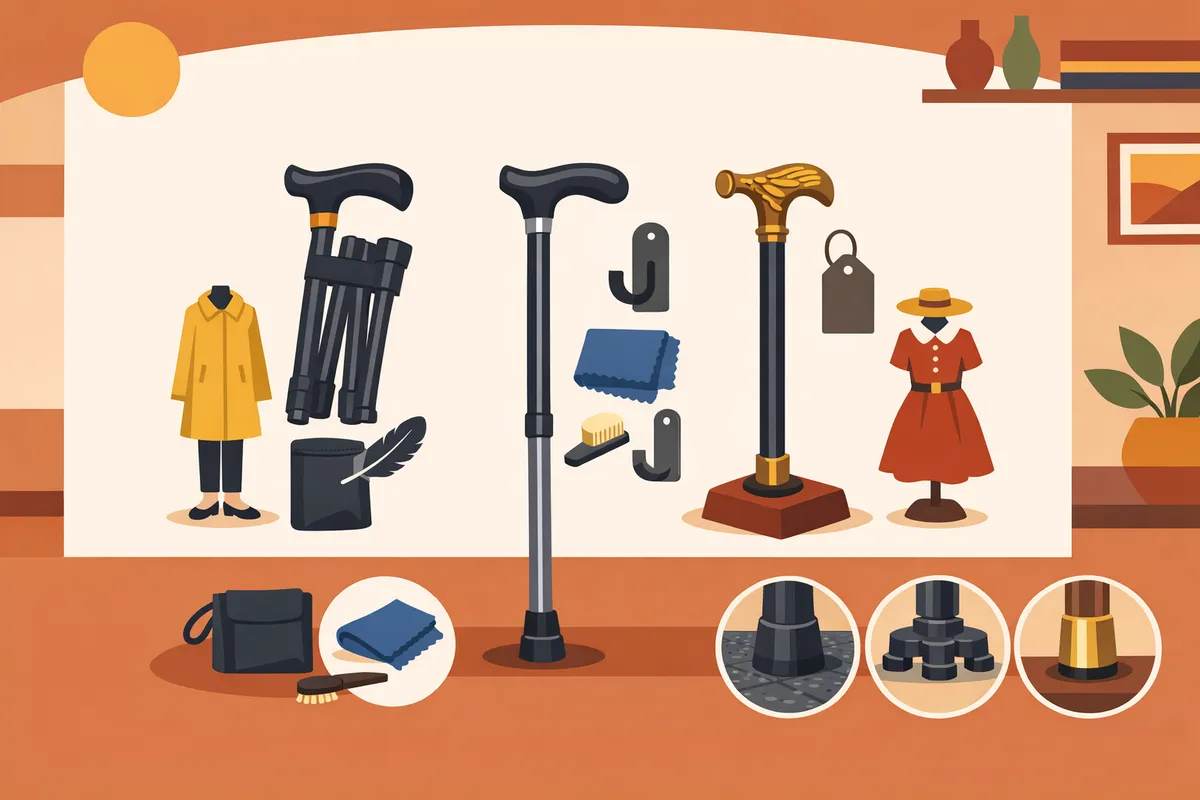
Match cane scale, color, and handle detail to your outfit silhouette and daily activity, and maintain finishes with simple cleaning and upright storage. Stylish walking canes and unique walking canes can act as both a support tool and a deliberate wardrobe accent when you choose size, material, and tip that suit the look. Our Better Canes Umbrellas catalog organizes pieces by use case so you can pick commuter, formal, or collectible styles with clear photos and measured dimensions.
Styling by occasion: commuter, formal, and collectible looks 👔
Choose compact, low-profile canes for commuting, refined metal or lacquered handles for formal wear, and ornate or themed sticks for collectible or costume use. For daily commuting, select a slim, quick-fold or telescoping cane in a neutral finish to fit under a coat and stow on public transit; pair it with a knee-length trench, slim jeans, and low-heeled boots for balanced proportions. For suits and dress events, pick a polished brass or lacquered handle in a classic shape (derby or crook) that matches your belt buckle or cufflinks; a darker shaft with a subtle sheen reads as intentional rather than utilitarian. For costume or gift occasions, choose a themed or carved cane with enamel or brass accents to echo the outfit\’s colors or historical references. Our Better Canes Umbrellas collection separates commuter sticks from dress and novelty lines so you can compare visuals and handle profiles quickly.
Care, maintenance, and storage to preserve finishes 🧴
Regular gentle cleaning and correct storage prevent scratches, corrosion, and finish loss on brass, enamel, and wood canes. Wipe down metal finishes with a soft, dry microfiber cloth after exposure to rain or salt; use mild soap and water for enamel, then dry immediately. For wood shafts, apply a small amount of wood oil or paste wax every 6–12 months to protect the grain and shine. Inspect rubber ferrules monthly and replace when you feel slippage or see wear; a fresh ferrule restores grip and prevents shaft damage from hard impacts. Store canes upright in a padded rack or hanging loop away from direct sunlight and radiators to avoid warping and color fade. Better Canes Umbrellas recommends testing a small, inconspicuous area before any polish or oil.
💡 Tip: Store canes upright and wipe metal finishes with a soft cloth after rain to prevent spotting.
Where to buy: local stores, online options, and Better Canes Umbrellas catalog 🛒
Try canes in person at a local retailer to verify handle comfort and length, or order measured pieces from Better Canes Umbrellas when you prefer delivery. Bring the shoes you normally wear when you try a cane so the wrist-crease measurement and elbow angle match everyday use. On our site, each product page lists measured dimensions, handle type, and close-up photos so shoppers who prefer delivery can compare fit and finish before buying. If you want hands-on help, use a local store visit to test ferrule traction and handle grip, then return to our Better Canes Umbrellas catalog to browse complementary colors, ladies and mens cane collections, or novelty sticks for gifts. Operating since 2000, we stock commuter sticks, dress canes, and unique walking canes across price and style ranges to suit practical needs and style goals.
Frequently Asked Questions
These FAQs answer the most common sizing, safety, legality, and care questions readers ask about stylish walking canes. Better Canes Umbrellas highlights practical distinctions between decorative models and support-rated canes so you pick the right piece for style or daily use. Use these Q&As to check fit, care, travel rules, and customization options before you buy.
How are fashionable walking canes different from medical mobility canes? 🦯
Fashionable walking canes are decorative mobility accessories that prioritize aesthetics and light support, while medical mobility canes are certified support devices that prioritize structural strength, correct height, and load rating. Fashionable walking canes often use carved wood, enamel, or ornamental metalwork and may omit clinical features like tested load-bearing joints or adjustable locking mechanisms. Medical mobility canes specify weight capacity, shaft material (steel, aluminum, or reinforced wood), and recommended user conditions on the product page. On our site, Better Canes Umbrellas labels items intended for daily support versus decorative use so you can compare construction and recommended use before purchase.
What length cane should a petite person buy? 📏
Petite users should measure from the floor to their wrist crease while standing in the shoes they wear most, then choose a cane length equal to that measurement or 2 to 4 inches shorter if a slightly lower fit feels more comfortable. Steps: 1) Wear typical shoes, stand relaxed, and have a helper measure to your wrist crease. 2) Note your natural elbow bend; a 15-20 degree bend indicates correct height. 3) If you prefer a closer hold when sitting, subtract 2 inches. For convenience, our Petite Canes collection at Better Canes Umbrellas offers common pre-sized options so you can skip adjustments.
Are unique walking canes legal to carry in public? ⚖️
Most decorative and unique walking canes are legal to carry in public, but local laws and private-venue policies can restrict items that resemble weapons or conceal blades. Check rules for courthouses, schools, concert venues, and transit systems before bringing ornate handles or concealed compartments. Airport security follows Transportation Security Administration rules and may inspect or prohibit items with hidden blades or large blunt attachments.
⚠️ Warning: Do not assume ornate plating or hidden features are allowed; if a cane could be interpreted as a weapon, contact the venue or airline ahead of time.
Better Canes Umbrellas recommends declaring any metal accessories at security checkpoints and packing delicate finishes in carry-on luggage when traveling.
Can I use a fashion cane for daily mobility support? 🧭
Some fashion canes provide safe daily support if they have a robust shaft, secure handle attachment, appropriate tip, and a stated load rating; others are decorative only. Verify construction details: solid wood or metal shafts, screwed or bolted handle junctions (not glued), non-slip rubber or quad tips, and any listed weight capacity. If you rely on a cane for balance or gait correction, consult a clinician to confirm suitability; using the wrong cane risks falls and joint strain. Better Canes Umbrellas lists construction notes and recommended uses on product pages so buyers can distinguish supportive commuter styles from novelty pieces.
How do I care for brass, enamel, or carved wood finishes? 🧴
Brass, enamel, and carved wood finishes require gentle cleaning, avoidance of abrasive chemicals, and periodic polishing or conditioning to preserve appearance and prevent corrosion or drying. Brass: wipe with a soft cloth and mild soap, then use a non-ammonia brass polish sparingly on exposed metal. Enamel: clean with a damp microfiber cloth and mild detergent; avoid solvents that can dull the coating. Carved wood: dust with a soft brush, clean with a slightly damp cloth, and apply a thin coat of natural beeswax or furniture conditioner once or twice a year. Storage: keep canes upright in a dry area away from direct sunlight to prevent warping or finish fading. Our product pages on Better Canes Umbrellas include finish-specific care tips for each cane.
Do you offer custom or engraved canes and how long do custom orders take? ✍️
Better Canes Umbrellas offers custom and engraved canes through our custom collection, and lead times depend on the level of personalization and finish. Simple engravings and stamped initials typically require less processing than hand-carved or plated commissions; hand finishes and bespoke hardware add more time. To request a custom quote: 1) Choose a base model or describe desired materials and handle style. 2) Provide engraving text, font preference, and any reference images. 3) Submit the request through our custom order form or contact customer service for a timeline and price estimate. We confirm materials, expected turnaround, and shipping options before you place the order.
Next steps to choose and style your walking cane.
You now know how correct sizing, handle choice, and tip selection combine with outfit pairing to pick stylish walking canes that fit your life. Measure with the shoes you wear most and test grips in store when possible to avoid returns and fit problems.
💡 Tip: Measure to the floor while wearing your usual shoes; confirm a 90-degree elbow angle and test the handle for comfort.
Better Canes & Umbrellas Inc., founded in 2000 and based in Chatham, NJ, sells umbrellas, walking sticks (including novelty sticks and hiking sticks), and shoe horns online and in retail. Their assortment covers commuter umbrellas, supportive walking and hiking sticks, novelty collectible canes, and practical shoe horns, aimed at daily use, gifting, and weather protection. That breadth helps shoppers find functional and fashion-forward options without guessing at fit or purpose.
Find a match at Better Canes Umbrellas: browse their walking stick collection and use the sizing and style notes from this guide to pick a cane you will wear confidently every day. Subscribe to the newsletter for fit tips, outfit pairings, and care reminders.