
Novelty Walking Canes: 2026 Collector & Gift Buyer’s Guide (Styles, Materials, Sizing, Care, and Occasion Ideas)
Novelty Walking Canes: 2026 Collector & Gift Buyer’s Guide (Styles, Materials, Sizing, Care, and Occasion Ideas)
Many buyers compare 20+ models before buying novelty walking canes, wasting hours on sizing and material decisions. Novelty walking canes is a category that features decorative, themed, and collectible walking sticks designed for giftability, costumes, and display rather than purely medical support. Our 2026 beginner's guide distills styles, materials, sizing, care, and occasion ideas so buyers and new collectors choose with confidence. Better Canes Umbrellas, operating since 2000 in Chatham, NJ, offers a broad assortment of novelty sticks alongside commuter umbrellas, hiking sticks, and unique shoe horns. Beginners often feel overwhelmed; this guide starts from zero and shows how to spot collectible quality, avoid costly mistakes, and save shopping time. Which styles and care steps best balance daily use, display value, and gift appeal?
What are novelty walking canes and how do their styles differ?
Novelty walking canes are decorative or collectible canes that combine visual design with varying levels of practical support. Style choice affects weight, materials, and intended use, so picking the right family matters for gifting, daily carry, or collecting.
Which style categories should I know about? 🎭
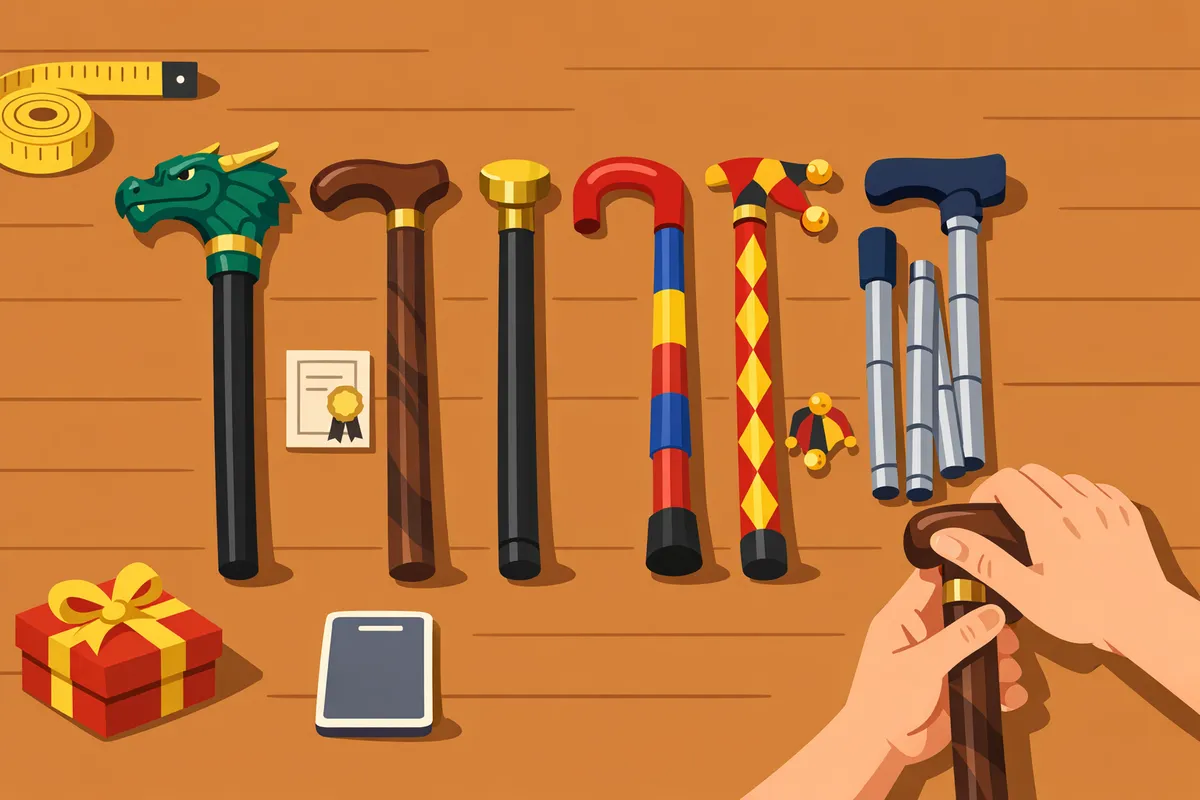
Key style categories are humor, designer/fashion, replica/collector, costume/prop, and children's novelty canes. Humor canes are a style that prioritizes visual jokes and bold graphics; examples include oversized novelty prints or pun-themed handles that aim for visual impact rather than load-bearing support. Designer or fashion canes are a style that pairs aesthetic details with everyday usability; brands in our catalog balance slim shafts, ergonomic grips, and polished finishes for daily carry. Replica and collector canes are a style that focuses on historical accuracy and provenance; collectors choose specific makers, period details, and documented origin. Costume or prop canes are a style that prioritizes appearance for events over long-term durability; they fit theatre, cosplay, and single-event gifting. Children's novelty canes are a style sized for smaller hands and lighter loads, with safety-first tips and soft grips.
Each category implies trade-offs: humor and costume pieces favor looks and low weight, designer canes balance strength and style, and replicas often use heavier materials for authenticity. Our catalog at Better Canes Umbrellas lists representative picks for every category so shoppers match intent to design quickly.
What materials and finishes are common? 🔩
Common materials include hardwoods (oak, walnut, maple), metal alloys, acrylic and resin, plated brass or nickel accents, and modern carbon-fiber. Wood is a material that offers warm finish options and varies in weight by species; oak and walnut tend to be heavier and better for display, while maple polishes well for a midweight daily cane. Metal alloys are a material that provides strength and thinner profiles; stainless and aluminum resist corrosion and suit slimmer, supportive shafts. Acrylic and resin are a material that enable sculpted or painted handles; they allow intricate motifs like animal heads or themed sculptures but may sacrifice long-term load capacity. Carbon-fiber is a material that delivers light weight and high strength for commuters who need daily support with minimal bulk.
Match material to expected use: heavier hardwoods for display or museum-style replicas; lightweight metals or carbon-fiber for daily carry; resin for collectible novelty pieces that emphasize detail. Our site flags material and recommended use on each product page to reduce guesswork.
💡 Tip: If the recipient will use the cane for support, choose a metal or carbon-fiber shaft with an ergonomic grip rather than a resin prop handle.
How do style and material compare in a table? 📊
The table below compares style families, typical materials, typical weight ranges, recommended use, gift suitability, and example models from our catalog.
| Style family | Typical materials | Typical weight range | Recommended use | Gift suitability | Example model (Better Canes Umbrellas) |
|---|---|---|---|---|---|
| Humor / gag | Acrylic, lightweight woods, printed fabrics | 8–16 oz | Occasional carry, party gifts | High for novelty gifting | Jester-Print Party Cane |
| Designer / fashion | Maple, walnut, plated metal accents | 12–20 oz | Daily carry with style | Excellent for stylish recipients | Metro Classic Walnut Cane |
| Replica / collector | Hardwood, brass fittings, dense resin | 1.0–2.5 lb | Display, careful use | Excellent for collectors | Victorian Replica Walking Stick |
| Costume / prop | Resin, low-density wood, painted finishes | 10–18 oz | Theater, cosplay, single events | High for themed gifts | Phantom Costume Cane |
| Children's novelty | Lightweight wood, plastic, rubber tips | 6–12 oz | Play, dress-up, light use | High for kids' gifts | Kids Animal-Head Cane |
| Performance / stage | Reinforced metal, custom grips | 14–24 oz | Stage performance, juggling | Medium to high depending on design | Performer Reinforced Cane |
Each example model above reflects a typical offering in our catalog and helps buyers decide between collectible novelty canes and practical gift options. For collectors seeking provenance, look for replica entries that list materials and maker notes.
How do I choose a novelty walking cane for gifts or everyday use?
Match the recipient's support needs, height, and grip to the cane's style and material to avoid wasted purchases and returns. Confirm whether the cane must provide daily support or is primarily decorative, and use our website's quick-fit notes to speed selection when shopping novelty walking canes for gifts.
Gift checklist: what to confirm before buying 🎁
Confirm the recipient's mobility needs, wrist-to-floor measurement, handedness, grip preference, allergies, and whether the cane should be functional or decorative.
- Mobility level. Ask whether the cane is for balance, moderate support, or purely ornament; that determines shaft strength and handle type.
- Measurement. Use wrist-to-floor while the recipient wears typical shoes; that measurement selects cane length and reduces return risk.
- Handedness and grip. Note dominant hand and if the person prefers a T-handle, derby handle, or ergonomic grip for wrist comfort.
- Weight and materials. Older recipients often need lighter options (aluminum or hollow hardwood); active users may prefer solid hardwood or metal-reinforced shafts.
- Allergies and sensitivities. Confirm metal allergies (nickel) or sensitivities to varnish solvents before choosing metal accents.
- Decorative vs. functional. If the cane is primarily decorative, prioritize design and finish; if functional, prioritize load-bearing rating and warranty.
- Confirm support level and measurement.
- Choose material and grip based on daily use.
- Pick a design that matches the recipient's style and the intended occasion.
💡 Tip: Measure wrist-to-floor with the recipient standing naturally in shoes they plan to wear with the cane. That single check cuts returns by preventing the most common fit error.
Our website's product pages include quick-fit notes and suggested recipients so you can match a specific model to a gift scenario without guessing.
How should I set a budget and compare price tiers 💲
Set a budget based on material, maker detail, and collectibility rather than brand name alone. For example, similar-looking canes can differ in longevity because of shaft construction or hand-carved detailing.
- Entry-level novelty. Typically decorative resin or basic wood finishes that work well for costume, occasional use, or a low-cost gift. These are best when the cane is ornamental rather than load-bearing.
- Mid-range. Solid hardwood or metal-accented canes that withstand daily light use and often include better finishes and fittings. Expect longer lifespan and clearer warranty terms.
- Collector-grade. Limited runs, signed reproductions, or hand-carved pieces that prioritize maker detail and rarity. These items hold appeal for collectors and gift recipients who value provenance.
For budgeting, consider expected lifespan and warranty: a mid-range cane often costs more upfront but reduces replacement and repair costs over several years. Our website groups products by material and intended use so you can compare like-for-like across price tiers.
Why choose Better Canes Umbrellas for novelty canes 🛍️
Better Canes Umbrellas curates novelty walking canes that balance style, practical support, and gift readiness.
Better Canes Umbrellas has operated since 2000 and combines an online catalog with an in-person retail location in Chatham, NJ where buyers can test grip and length before purchase. Our product pages include quick-fit notes, suggested recipients, and clear descriptions of whether a model is decorative or rated for daily support.
How that helps you: it removes the guesswork and time spent comparing specs across marketplaces, reduces the risk of buying a decorative cane when support is needed, and shortens the path to a gift-ready item (packaging, warranty details, and care instructions).
- Services that speed buying: curated gift lists, in-store testing, clear fit guidance, and visible warranty information.
- Practical outcome: faster selection with fewer returns and confident gifting for both collectors and everyday users.
How do I size, test, and confirm a comfortable fit for a novelty walking cane?
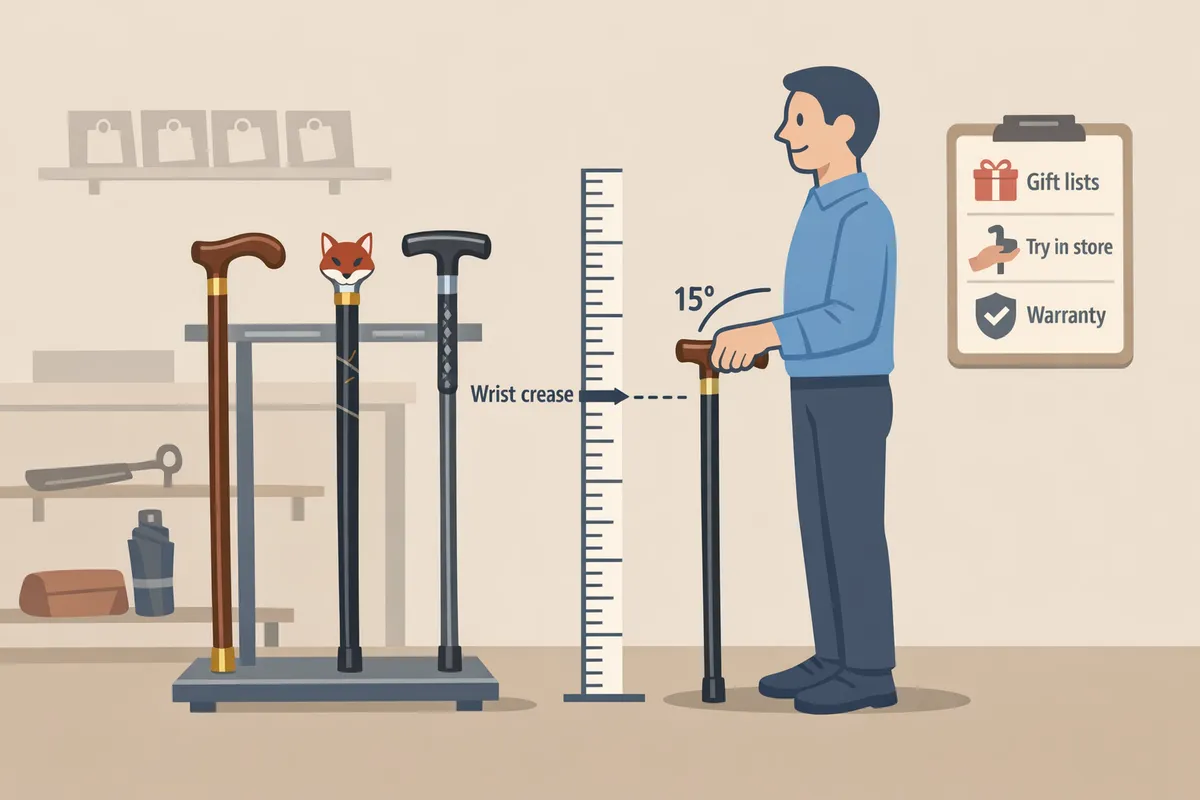
Measure cane length from the floor to the wrist crease while the person stands upright and confirm fit by testing grip comfort, a natural elbow bend of about 15 degrees, and stability on the primary terrain. Poor sizing causes pain, increased fall risk, and returns; a quick measurement and a short walk test eliminate most problems. For novelty walking canes for gifts, sizing checks protect both the recipient's safety and the gift's longevity.
How to measure cane length at home 📏
Measure from the floor to the wrist crease while the person stands upright wearing the shoes they will normally use with the cane. Wrist crease is the fold at the base of the palm that marks the natural hand-rest point. Follow this numbered checklist for a repeatable, accurate measurement:
- Have the person stand straight with weight evenly distributed and shoes on.
- Relax the arm at the side; do not let the shoulder shrug.
- Use a tape measure from the floor to the wrist crease. Record the number in inches.
- Try a cane length equal to that number; add one inch only if the user prefers a slightly taller posture.
- Check that the elbow bends roughly 15 degrees when holding the cane handle.
- Re-measure while holding a small book or light bag if they carry items often.
For example, if the wrist measurement reads 36 inches, a 36-inch cane is the recommended starting point; choose 37 inches only for a deliberate upright posture. Better Canes Umbrellas lists adjustable models and length charts to match these measurements, which helps remote shoppers avoid fit issues.
Which grip type fits my hand size best? 🖐️
Choose a grip that matches hand size, dexterity, and how much load the cane must bear. Derby handle is a handle style that offers a curved top with a thumb rest for leverage and is comfortable for many users. Crook handle is a handle style with a rounded top that hooks over the arm and suits casual use and quick hangs. Anatomical grip is a handle shape that contours to the palm to spread pressure for users with weak wrists or arthritis.
Try these steps to match grip to hand size and function:
- Measure hand circumference at the knuckles with a soft tape; compare by trying small, medium, and large grips in-store. As an example scenario, a person with larger knuckles often finds anatomical or thicker derby grips less likely to pinch.
- Consider dexterity: users with limited finger movement do better with thicker, contoured grips that require less force to hold.
- If the cane will bear heavy daily weight, choose a derby or T-handle for thumb support; for light decorative use, a crook handle often feels familiar and elegant.
Better Canes Umbrellas provides grip photos and return options so buyers can compare styles before finalizing novelty walking canes for gifts.
⚠️ Warning: Avoid grips that force fingers into awkward angles or require tight squeezing; those increase fatigue and joint pain.
How do weight and tip type affect daily use ⚖️
Cane weight and tip type determine arm fatigue and traction across different surfaces. Ferrule is the cane's protective tip that contacts the ground and provides traction; quad base is a four-point base that increases stability but adds weight. Choose materials and tips according to where the cane will be used most often.
Practical guidance:
- For long commutes or all-day use, prefer lighter shafts such as aluminum or carbon fiber to reduce arm and shoulder fatigue.
- For uneven paths, wet surfaces, or older users, select larger rubber tips or a quad base to increase contact area and stability.
- For indoor-only or decorative canes, a standard rubber tip is often sufficient but verify replacement-tip availability before purchase.
Check replacement-tip listings at Better Canes Umbrellas before buying so you can source spares that match your chosen tip diameter and style.
Can I try before I buy at a retail location? 🏬
Yes; in-person fitting confirms grip comfort, balance, and cane length under normal conditions. Follow these test steps whether you visit a store or trial at home during the return window.
In-store or at-home trial checklist:
- Wear the shoes you plan to use with the cane and stand naturally.
- Hold the cane so the handle rests at the wrist crease; confirm the elbow bends about 15 degrees.
- Walk 10 to 20 steps on level ground, then try stairs, a slope, and a turn to feel balance and weight distribution.
- Test picking the cane up from a chair and placing it down; check that the grip and handle shape suit daily tasks like opening doors.
- Inspect fittings: the shaft should not wobble and the handle must be secure.
Our Chatham, NJ store invites buyers to test grips, heights, and weight before purchasing; remote buyers should use these trial steps at home and use Better Canes Umbrellas' return policy if the cane does not match the fit or comfort expected.
How do I care for novelty walking canes and develop a collectible assortment?
Regular cleaning, correct storage, and clear documentation preserve a novelty walking cane's appearance and resale or display value. Follow a short maintenance schedule, store items to avoid light and humidity damage, and record provenance for collectible novelty canes. Better Canes Umbrellas lists maker and edition details on product pages to help collectors start an accurate inventory.
What are the basic cleaning and maintenance steps? 🧼
Wipe finished wood and resin canes weekly with a soft, damp cloth and dry them immediately to avoid finish lifting. Use a mild soap solution for grime and a microfiber cloth to remove residues; never soak a cane or use household solvents on decorative finishes. Polish metal accents sparingly with a nonabrasive metal cleaner and test a small area first.
Check ferrules and rubber tips monthly for wear and replace them before stability degrades; daily commuters may need new rubber tips every 6–12 months, while occasional users can expect longer intervals. Keep a short numbered maintenance log (date, action, condition) and store replacement tips and a small care kit with the cane. Better Canes Umbrellas stocks replacement tips and care accessories for common cane styles.
💡 Tip: Note the cane's serial or edition number on your maintenance log to link condition checks with provenance records.
How should collectors store and display canes? 🗄️
Store canes upright in a padded rack or hang them on wall mounts away from direct sunlight and damp basements to prevent warping and finish fade. Use individual mounts with padding at contact points and rotate displayed items every few months to prevent stress on a single area.
For high-value pieces, place silica packets in closed display cases to control humidity and keep temperature steady; avoid attics and ground-floor rooms that fluctuate. Photograph each cane from multiple angles and keep receipts and original packaging together in a labeled folder. Better Canes Umbrellas offers padded display mounts and wall brackets suitable for both temporary shows and permanent displays.
How do I build provenance and value for collectible novelty canes? 📜
Document maker marks, edition numbers, purchase receipts, and high-resolution photographs to establish provenance for collectible novelty canes. Provenance is documentation that traces ownership and origin that increases buyer confidence. Record the maker, any artist signatures, limited-edition numbers, and the purchase date and seller.
Store provenance materials together: scanned receipts, condition notes, and photos with close-ups of maker marks and unique features. Number your collection and keep an inventory spreadsheet or printed binder with condition updates after each showing or loan. Our website's product pages include maker and edition details to help collectors capture authoritative identifiers when buying from us.
When should I choose professional restoration or appraisal? 🛠️
Choose professional restoration for structural damage or when decorative finishes or inlays show active deterioration; always get an independent appraisal before major restoration or sale. Appraisals provide a pre-restoration value baseline and help you avoid repairs that inadvertently reduce market value.
Seek conservators experienced with wood finishes, metal plating, or carved handles for complex repairs; simple repairs like replacing a worn rubber tip can remain DIY. Better Canes Umbrellas can refer customers to vetted local conservators and appraisers through our service pages when a piece requires specialist care.
⚠️ Warning: Avoid sanding, aggressive solvents, or repainting on rare or signed pieces; DIY attempts often remove maker marks or original finishes and can lower value.
Frequently Asked Questions
This section answers common buyer and beginner collector questions about novelty walking canes with short, actionable responses. Use these answers to speed decisions about gifts, travel, safety, and long-term care.
Are novelty walking canes safe to use as primary mobility aids? 🩺
Some novelty walking canes are safe for light, occasional use, but most are not rated for daily medical support. Check material (solid hardwood or steel), shaft wall thickness, tip design, and the stated weight capacity before relying on a cane for regular mobility needs. Better Canes Umbrellas clearly marks support-rated walking sticks in our catalog and lists recommended use on each product page; for medical-grade requirements, consult a healthcare professional.
⚠️ Warning: Only use canes explicitly rated for support as a primary aid; untested decorative elements can fail suddenly and cause falls.
Can I personalize a novelty cane as a gift? 🎁
Yes — many novelty canes accept personalization such as engraved plaques, custom handles, or wrapped bands. Our product pages show which items accept customization, list lead times, and explain how custom orders affect return policy and shipping. When ordering a personalized gift, confirm handle dimensions, finish, and spelling before checkout to avoid costly rework.
How do I tell if a cane is a collectible novelty cane or just decorative? 🏷️
Collectible novelty canes typically include maker marks, limited-edition numbers, higher-grade materials, or documented provenance; decorative canes prioritize looks and lower cost. Inspect for stamps, signed makers, serial plates, quality of materials (bone, carved hardwood, metal inlays), and any original paperwork or receipts to establish collectible status. Better Canes Umbrellas highlights limited runs and special collections in our listings and can provide provenance details for qualifying pieces.
What is the best cane tip for wet or icy conditions? ❄️
A larger-diameter rubber tip with deep grooves, or an attachable ice-specific spike, provides the best traction on wet or icy surfaces. Look for tips labeled "all-weather" or "ice grip," verify compatibility with your shaft, and carry a spare tip so you can swap before winter weather. Better Canes Umbrellas offers replacement all-weather tips and winter attachments listed by compatible cane model.
Do airlines restrict carrying novelty walking canes on flights? ✈️
Airlines generally allow walking canes in the cabin but may inspect unusual attachments or require removal of sharp elements at security. Secure or remove fragile decorations before travel and contact the carrier if the cane is high-value or antique to request handling guidance. Better Canes Umbrellas recommends packing valuable novelty sticks in a protective case and checking the airline's checklist before arrival at the airport.
How long should a novelty cane last with regular use? ⏳
Longevity depends on shaft material, construction quality, and maintenance; quality hardwood or metal shafts used daily can last for several years with routine care. Replace worn rubber tips promptly, tighten loose fittings, and store canes away from excessive humidity and direct sunlight to prevent warping or finish failure. Better Canes Umbrellas provides care notes per material on each product page and stocks replacement tips and repair fittings to extend usable life.
Next steps for buyers and beginner collectors
Use this guide to match style, material, sizing, care, and occasion before you buy.
Picking novelty walking canes requires choosing the right style, material, and fit to match the recipient and intended use. For example, a lightweight aluminum shaft with a folding tip suits frequent travelers, while a hardwood cane with a decorative handle works well as a collectible or gift. Follow the sizing and care tips in this guide to avoid returns and extend the cane's life.
Better Canes & Umbrellas Inc., founded in 2000 and based in Chatham, NJ, is an online and retail seller focused on umbrellas, walking sticks (including novelty sticks and hiking sticks), and shoe horns. The company expanded its assortment in 2005 to include a wide range of walking and novelty sticks and later added shoe horns in unique styles and designs. Their catalog balances fashion and function for commuters, collectors, and gift buyers.
Browse Better Canes & Umbrellas' novelty and collectible cane selection to pick your first piece and check sizing notes before purchase. Subscribe to our newsletter for buying tips, care reminders, and new-arrival alerts.