
How to Choose a Compact Umbrella with Strong Wind Resistance (Commuter & Travel Guide)
How to Choose a Compact Umbrella with Strong Wind Resistance (Commuter & Travel Guide)
A single gust that flips a flimsy umbrella can cost a commuter 20 minutes and a ruined jacket during rush hour. A compact umbrella with strong wind resistance is a travel umbrella that uses reinforced ribs and vented canopies to shed gusts without inverting. This how-to guide teaches commuters and travelers how to pick, test, and maintain a compact umbrella that resists strong winds so you avoid wasted trips and repeated replacements. At Better Canes & Umbrellas, founded in 2000 and based in Chatham, NJ, our catalog pairs practical commuter umbrellas with fashion-forward and collectible designs while also offering walking sticks and shoe horns for gift or mobility needs. Which quick test separates a sturdy commuter fold from a broke-one-in-a-gust?
Which compact umbrella features actually resist strong winds?
Wind resistance for a compact umbrella depends primarily on rib and frame materials, canopy design, and joint durability. Choose the specs that match your commute or travel patterns to favor flex over breakage and avoid a small umbrella that won’t flip inside out.
What is a wind-resistance rating and how should you read it? 🌬️
A wind-resistance rating is a measurement that compares umbrella performance against gust speeds by testing inversion, frame stress, and canopy integrity. Wind-resistance rating is a measurement that shows whether an umbrella withstands specified gusts, passes inversion tests, or meets a numeric durability scale. Common formats are gust-speed claims (for example, "survives 30 mph gusts"), pass/fail inversion tests, or a 1–5 durability scale. For commuting, treat 25–30 mph gust claims as realistic urban targets; higher numbers often come from idealized lab setups. Check test conditions in the fine print: was the umbrella open when tested, were seams wet, and did the test include repeated gusts? Better Canes Umbrellas labels commuter models with clear test notes when available, which helps set realistic expectations for a compact umbrella with strong wind resistance.
Rib and frame materials compared: fiberglass, steel, and composite 🦾
Fiberglass ribs bend under gusts to avoid snapping, steel ribs resist straight collapse but can permanently deform, and composite frames aim to balance weight and fatigue resistance. Fiberglass ribs are structural elements made from fiber-reinforced plastic that flex under load rather than snap. Steel ribs give stiffness and lower cost but can crease and rust unless coated. Composite frames (carbon-fiber mixes or reinforced plastics) reduce weight and resist metal fatigue but cost more.
Key trade-offs to consider:
- Weight: composites < fiberglass < steel.
- Fatigue resistance: fiberglass and composites outlast thin steel in repeated folding.
- Corrosion risk: untreated steel corrodes; fiberglass and composites do not.
- Failure mode: fiberglass bends and returns; steel may crease; composites may crack under extreme stress.
For daily urban gusts, choose reinforced fiberglass ribs for resiliency and low maintenance. Better Canes Umbrellas offers commuter compact lines with reinforced fiberglass ribs and travel lines with lighter composite frames so you can pick by packing needs and wind exposure.
Canopy and vent design features that prevent inversion and leaks ☔
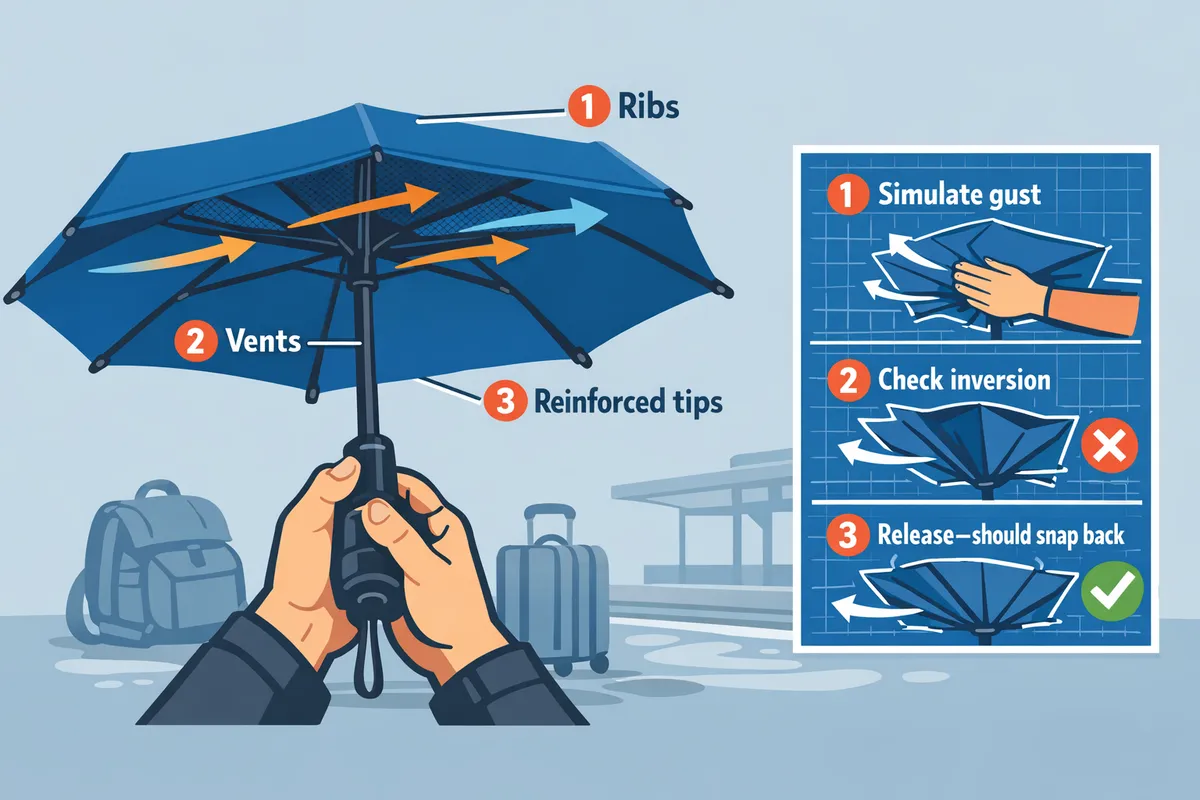
Vented canopies, reinforced tips, and heavier fabric weights reduce inversion and water penetration during gusts. Vented canopy is a canopy that uses overlapping panels or secondary layers to channel wind through instead of flipping the whole canopy. Single-vent designs let some air through and help reduce pressure; double-vent designs perform better in crosswinds by providing a controlled escape path for gusts. Canopy fabric weight and weave matter: heavier 190T polyester or pongee resists sag and water-through better than thin polyester. Reinforced seam stitching, taped or bound seams, and robust tip construction (metal or reinforced plastic tips) reduce tear points that lead to inversion and leaks.
Practical specs to prioritize for a small umbrella that won’t flip inside out:
- Double-vent or vented panel design for gusty streets. 2. Reinforced tips and rib anchors to prevent detachment. 3. Mid-range canopy diameter (38–42 inches) to balance coverage and leverage in wind.
💡 Tip: Test a compact umbrella outside against a brisk gust or a large fan before your first commute; if the canopy inverts and does not pop back quickly, choose a different model.
Better Canes Umbrellas pairs vented canopies with reinforced tips on its commuter compacts so customers get measurable protection without excessive packing weight.
How to choose and test a compact umbrella with strong wind resistance for commuting and travel?
Match umbrella features and quick field tests to your commute or travel pattern so you pick a compact umbrella with strong wind resistance that actually holds up where you use it. Follow four practical steps: define your wind profile, inspect specs to shortlist, run three fast tests, then rank finalists in a comparison table. Each step includes examples and expected outcomes you can verify in-store or during a 5-minute at-home check.
Step 1: Define your commute and travel wind profile 🧭
Map common gust speeds and packing constraints to the canopy size and frame stiffness you need. Typical urban commutes face gusts of 15–30 mph (light-to-moderate) while coastal walks and exposed transit stops see 30–45+ mph gusts (strong). For example, choose a 38–42 inch canopy for solo commuter use in city gusts and a 42–46 inch canopy with stiffer ribs for coastal or exposed routes. Business travelers who need a short closed length (under 12 inches) should accept slightly heavier ribs if they expect stronger gusts.
Use this quick profile checklist to match your use case:
- City commute: gusts up to 30 mph, canopy 36–40 in, closed length <12 in, flexible fiberglass ribs.
- Transit hub or coastal walking: gusts 30–45+ mph, canopy 40–46 in, reinforced ribs, heavier build.
- Airline travel: strict closed length and weight limits; prioritize closed length under 11 in and sturdy ribs over minimal weight.
Better Canes Umbrellas lists commuter and travel categories that make it easy to match these profiles by filtering canopy diameter and closed length.
Step 2: Inspect specs and shortlist candidates 🔎
Prioritize rib material, canopy diameter, closed length, weight, and warranty when creating a short list. Look for fiberglass ribs for flex, or reinforced metal/fiberglass hybrids for higher stiffness; canopy diameter should match the profile from Step 1; closed length must fit your bag; and weight under 18 ounces usually balances packability and durability.
Exact checklist to use when viewing product pages or in-store tags:
- Rib material: fiberglass (flex) or hybrid reinforced frame (stability).
- Canopy diameter: pick from 36, 40, 42, 46 inches to match use case.
- Closed length: under 12 inches for travel; under 11 inches for strict carry-on needs.
- Weight: note ounces; expect 10–22 oz for compact models.
- Warranty and return policy: prefer models with a 1–3 year warranty and easy exchanges.
⚠️ Warning: Very light umbrellas (under ~8 oz) often cut corners on ribs. Expect reduced wind resistance and a higher chance of breakage.
Better Canes Umbrellas product pages typically display these specs clearly, which saves time when you build a 3–5 item shortlist.
Step 3: Perform three quick field tests 🧪
Run three fast checks—open/close speed, inversion response, and wet-drip after folding—to reveal weak frames and poor drainage. These tests take under five minutes and expose common failure modes that specs alone miss.
Do these in-store or in a safe outdoor spot with a steady breeze:
- Opening/closing speed and mechanism. Expected outcome: smooth auto or manual operation with no snag. What can go wrong: sticking joints signal weak hinges or poor assembly; reject models that jam after 3–5 opens.
- Inversion response in a gust. Expected outcome: ribs flex but return to shape without broken pieces; if the canopy collapses or ribs pop out of joints, the umbrella will likely fail in sustained gusts. If possible, test by angling the umbrella into a 20–30 mph gust or simulating with a fan.
- Wet-drip and fold test. Expected outcome: canopy sheds water quickly and folds so the wet side faces inward to limit drip. What can go wrong: pooling in seams or a slab-fold that leaves wet fabric exposed.
⚠️ Warning: Never hold an umbrella directly above your head in very strong gusts if nearby objects can strike the canopy. An inverted umbrella can cause loss of grip or injury.
If you bought online, use Better Canes Umbrellas' return policy window to run these tests at home; prioritize models with easy exchanges if the short tests fail.
Step 4: Use a comparison table to rank finalists 📊
Compare weight, wind-resistance rating, canopy size, rib material, closed length, price tier, and warranty in a table to pick the best windproof compact umbrella for travel. Give priority weights to attributes based on your profile: commuters value closed length and quick dry; coastal walkers prioritize wind-resistance rating and rib material.
How to weight attributes for common use cases:
- Daily commuter: closed length 30%, canopy size 25%, wind rating 25%, weight 20%.
- Business travel: closed length 35%, weight 25%, wind rating 25%, warranty 15%.
- Coastal/exposed routes: wind rating 40%, rib material 25%, canopy size 20%, warranty 15%.
| Model | Wind rating (1–5) | Rib material | Canopy diameter (in) | Closed length (in) | Weight (oz) | Price tier | Warranty |
|---|---|---|---|---|---|---|---|
| Better Canes Metro Compact | 4 | Fiberglass hybrid | 40 | 11.0 | 14 | Mid | 2 yr |
| Better Canes Traveler Pro | 5 | Reinforced fiberglass | 42 | 10.5 | 16 | Premium | 3 yr |
| Brand A Urban Fold | 3 | Steel ribs | 38 | 10.8 | 12 | Budget | 1 yr |
| Brand B Coastal Shield | 4 | Fiberglass + metal | 44 | 12.2 | 18 | Mid | 2 yr |
| Brand C Lightweight Pack | 2 | Thin aluminum | 36 | 9.8 | 8 | Budget | 1 yr |
| Brand D Executive Fold | 4 | Reinforced hybrid | 42 | 11.2 | 15 | Mid | 2 yr |
Use the table by assigning points per column based on your weighting and summing to find the best windproof compact umbrella for travel or the small umbrella that won’t flip inside out. For many commuters the Better Canes Metro Compact balances closed length and a strong wind rating; travelers who need extra durability can prioritize the Better Canes Traveler Pro.
How do you care for, troubleshoot, and avoid common mistakes with a compact umbrella that resists wind?
Regular care and timely repairs keep a compact umbrella with strong wind resistance performing longer and reduce the chance it will flip inside out or suffer frame failure. This section gives daily habits, step-by-step fixes for common failures, and clear guidance on when to contact Better Canes Umbrellas for repair or replacement. Follow these practices to keep a small umbrella that won’t flip inside out during a commute or trip.
Daily care and storage to preserve wind performance 🧴
Drying, loose storage, and gentle handling preserve ribs, joints, and canopy tension. Follow these practical steps after every use to avoid corrosion, mildew, and frame fatigue.
- Shake and air-dry. Open the umbrella briefly in a sheltered spot and shake off excess water. Expected outcome: fabric dries evenly and metal parts dry faster, reducing corrosion risk.
- Hang while drying. Use a coat hook or hanger so the canopy can drain and air circulate. Expected outcome: prevents mildew and puckered seams.
- Only fold when dry. If you must pack a damp umbrella, slip it into a breathable sleeve or paper bag and leave it slightly open until dry. Expected outcome: avoids trapped moisture that weakens fabric adhesives.
- Pack smart. Place the umbrella tip-down in a dedicated compartment or sleeve and avoid compressing it with heavy items. Expected outcome: fewer bent ribs and less pressure on joints.
- Monthly quick inspection. Check tips, rib bends, and slider movement. Expected outcome: early detection of worn parts you can fix before a commute fails.
💡 Tip: After use, open the umbrella briefly and hang it to air dry before folding to reduce corrosion and fabric breakdown.
Better Canes Umbrellas recommends these daily habits and includes protective sleeves with many commuter models to make safe storage easier.
Troubleshooting common failures and quick fixes 🛠️
Many common failures—bent ribs, stuck sliders, and loose tips—have simple, reversible fixes you can do in minutes. Use plain tools (cloth, needle-nose pliers, and a small screwdriver) and stop if metal shows cracking.
- Bent rib reshape. Support the canopy with one hand and gently bend the rib back to its curve with the other. Expected outcome: restored canopy shape and reduced snagging. What can go wrong: repeated bending causes metal fatigue; if you hear creaking or see hairline cracks, stop.
- Stuck slider. Apply a single light spray of silicone lubricant to the shaft where the slider binds and move it up and down until free. Expected outcome: smooth opening and closing. What can go wrong: oil-based lubricants can stain fabric; use a silicone product and wipe excess off.
- Loose tip or screw. Tighten small screws using an eyeglass screwdriver or replace missing tips with a replacement kit. Expected outcome: restored tip protection and less canopy wear. What can go wrong: overtightening strips threads; tighten until snug.
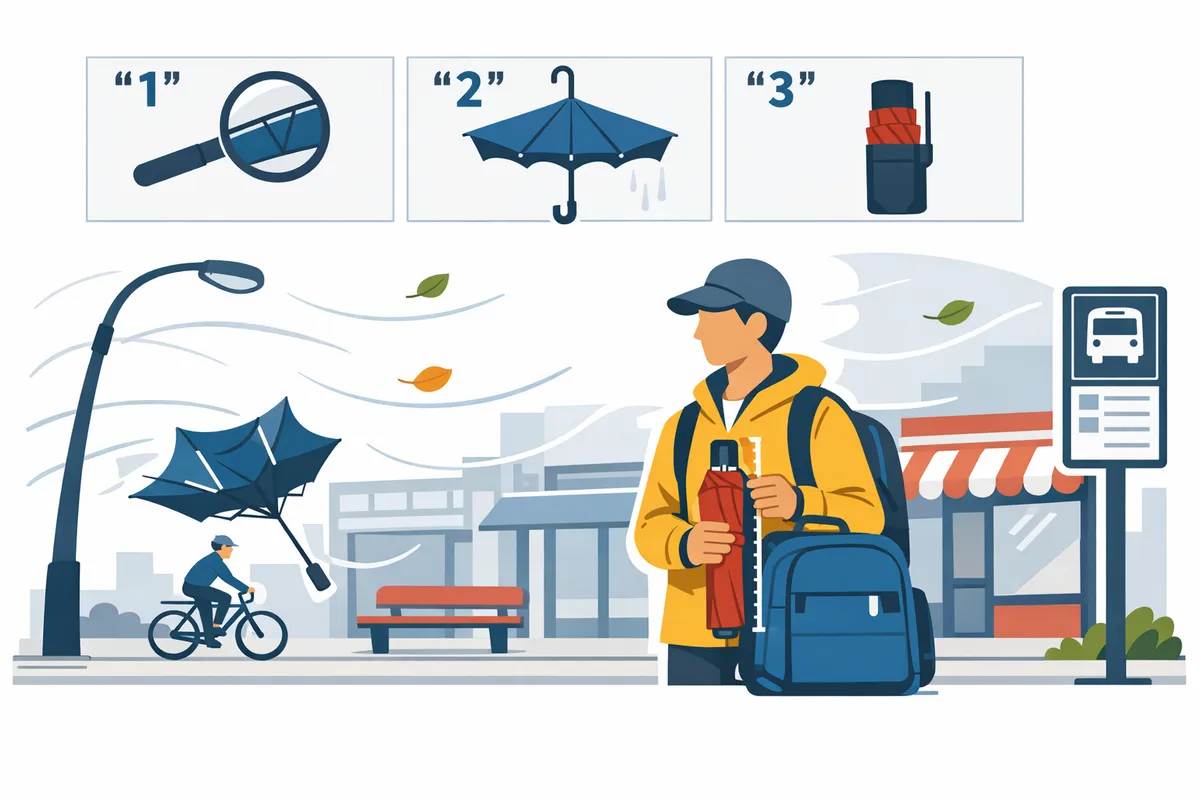
- After an inversion. Open the umbrella fully; if all ribs realign and no cracks show, continue using. Expected outcome: brief inversion recovery. When to stop: visible cracks, kinked ribs, or repeated inversions indicate structural failure and need for replacement.
If a repair needs parts or you prefer professional help, contact Better Canes Umbrellas support with photos and the purchase receipt so the team can advise on replacement parts or service options.
When to replace, how warranties work, and repair options 🔁
Replace a compact umbrella if it repeatedly inverts, shows cracked ribs, or leaks at seams after basic repairs. These are signs the frame or canopy has failed beyond economical repair.
- Assess damage. Photograph cracked ribs, torn canopy panels, and separated joints. Expected outcome: clear documentation for warranty or repair estimates.
- Estimate repair cost. Compare part or repair quotes to the umbrella's current price. Expected outcome: choose repair if part cost is substantially less than replacement; otherwise replace.
- Check warranty terms. Manufacturer warranties typically cover defects in materials or workmanship but not wear, misuse, or accidental damage. Expected outcome: determine if repair or replacement is covered by Better Canes Umbrellas support.
- File a support request. Send photos, order number, and purchase date to Better Canes Umbrellas support so the team can confirm coverage and next steps. Expected outcome: an action plan for repair, replacement, or return.
If the umbrella is out of warranty, consider local umbrella repair shops for rib replacement or recyclable disposal options if the frame is unsalvageable. For travelers, replacing a failed commuter umbrella before a trip avoids weather-related disruption and lost time.
Frequently Asked Questions
This FAQ answers the most common practical questions about choosing and using a compact umbrella with strong wind resistance. Commuters and travelers need clear guidance on what "wind-resistant" actually means, which in-store checks matter, how to pack without damage, and what repair or replacement options exist. Read each short answer, then follow the concrete steps or checks listed below.
How strong is "wind-resistant" for a compact umbrella? 🌬️
Wind-resistant is a descriptor that indicates an umbrella resists inversion at moderate gusts and returns to shape after bending. Manufacturers define "moderate gusts" differently, so look for lab test claims (gust speed or wind-tunnel notes) or independent reviews that name a gust threshold. For commuter use, prefer umbrellas that list vented canopies, flexible ribs, and reinforced joints because those specs directly reduce inversion and frame failure during 20–40 mph gusts in urban corridors.
Can a small umbrella really not flip inside out? ☔
Yes—compact umbrellas can resist inversion if they use vented canopies and flexible ribs that absorb gust energy. A double- or vented-canopy lets air pass through without ballooning the umbrella. Flexible fiberglass or composite ribs bend and spring back rather than snap, which prevents permanent deformation. Check user reviews for repeated inversion reports and inspect product pages on Better Canes Umbrellas for explicit canopy and rib material details before buying.
Is a heavier frame always better for wind? ⚖️
No—a heavier frame adds stiffness but does not always improve gust resilience for commuters or travelers. Heavier steel frames resist bending but increase carrying fatigue and take more space in a bag. Composite ribs (fiberglass, carbon-fiber blends) offer a better trade-off: they flex under gusts and return to shape, and they weigh less. Choose by use case: daily commuters who carry an umbrella all day should favor lighter composites; travelers who pack once and need high stiffness for storm-prone destinations may accept heavier frames.
What quick tests can I perform in-store to check wind resistance? 🧪
Open and close the umbrella several times, flex the canopy by hand, and simulate side gusts to spot weak joints or inversion tendencies. Follow these steps:
- Open/close five times to check hinge smoothness and alignment. Expected outcome: smooth cycles with no scraping or sticking. A noisy or stiff hinge signals potential early failure.
- Press the canopy center and release to simulate a gust. Expected outcome: canopy returns to shape without permanent creasing.
- Bend a single rib gently outward and let it snap back. Expected outcome: ribs recover their shape; permanent bends mean cheaper metal or poor tempering.
- If allowed, hold the umbrella into a light breeze to observe how the canopy vents air.
💡 Tip: Test open/close five times and inspect hinge movement closely; defects often reveal themselves in the first few cycles.
If the retailer forbids testing, rely on return policy terms and look for independent wind tests or repeated customer reports on the product page.
How should I pack a compact umbrella for travel to avoid damage? 🎒
Pack a compact umbrella upright in an outer pocket or in a protective sleeve and avoid compressing it under heavy items. Use these steps:
- Slide the umbrella into its sleeve to protect fabric and tips. Expected outcome: fewer snags and cleaner ribs at arrival.
- Place the umbrella upright in a backpack side pocket or top compartment to prevent repeated folding. Expected outcome: reduced stress on joints during transit.
- Avoid stacking heavy luggage on top of a closed umbrella. Expected outcome: fewer permanently bent ribs and longer hinge life.
- If packing in checked luggage, wrap the umbrella in soft clothing and keep it near the top.
⚠️ Warning: Do not pack a wet umbrella inside sealed luggage; drying it first prevents rust, mildew, and fabric degradation.
Better Canes Umbrellas includes packing tips on select product pages and offers protective sleeves on many commuter models.
Does Better Canes Umbrellas offer replacement parts or repairs? 🛍️
Yes, Better Canes Umbrellas provides customer support and replacement options for qualifying purchases. Consult the product page for warranty terms and part availability, then contact customer service with your order number and a photo of the damage. Typical resolutions include replacement ribs or discounted repair service; confirm whether shipping or repair fees apply before approving work. Because Better Canes Umbrellas has sold umbrellas and walking sticks since 2000, their support team can often advise on common failures and the fastest path to a repair or replacement.
Choose a compact umbrella that balances frame strength, canopy design, and portability.
Pick a compact umbrella with strong wind resistance by prioritizing reinforced ribs, a vented canopy, and a fold size that fits your bag. Test any candidate in a doorway or on a windy walk before you commit; a brief real-world trial reveals handle grip, rebound behavior, and how the canopy sheds gusts. Regular upkeep — rinsing salt or city grime and letting the canopy dry fully — keeps performance consistent over seasons.
Our shop, Better Canes & Umbrellas Inc., founded in 2000 and based in Chatham, NJ, is an online and retail seller focused on umbrellas, walking sticks (including novelty and hiking sticks), and shoe horns. We expanded our assortment in 2005 and position ourselves as a source for reliable, fashionable, and collectible items that solve weather and mobility needs. Start by browsing Better Canes & Umbrellas' commuter compact umbrellas to test a model that fits your daily route and travel bag. Subscribe to our newsletter for maintenance tips, travel picks, and new arrivals.