
Commuter Umbrellas: Complete 2026 Buyer’s Guide to Durable, Wind-Resistant Everyday Carry
Commuter Umbrellas: Complete 2026 Buyer’s Guide to Durable, Wind-Resistant Everyday Carry
A bent umbrella shaft during a rainy commute can cost a commuter 20 minutes and a soggy briefcase. A A commuter umbrella is a type of umbrella that balances canopy coverage, compact folded size, and wind resistance for daily urban travel. This beginner's guide breaks down canopy size, frame design, tested wind resistance, ease of opening, and real-world carry habits so you can compare compact, wind-resistant everyday umbrellas without getting lost in specs. Better Canes Umbrellas, from Better Canes & Umbrellas Inc. of Chatham, NJ (founded 2000), pairs practical commuter models with fashion-forward and collectible options—so which compact design truly balances low weight, rugged frame strength, corrosion resistance, and pocketable size?
What are commuter umbrellas and which features matter for city use?
A A commuter umbrella is a type of umbrella that balances canopy coverage, compact folded size, and wind resistance for daily urban travel. Knowing the measurable specs lets you compare models objectively and avoid mismatches between advertised size and actual coverage. Better Canes Umbrellas lists clear spec fields on product pages so you can match a model to your route and daily carry.
How canopy size and arc affect coverage ☔
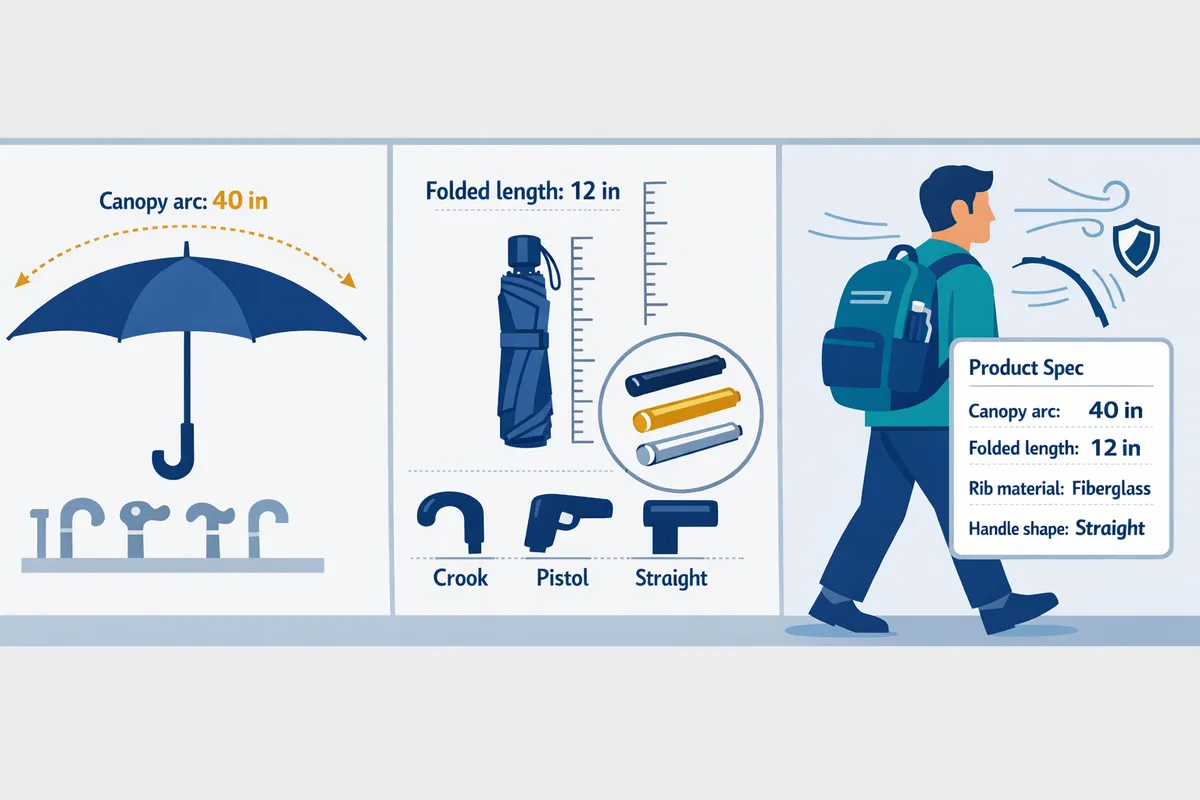
Canopy arc is a measurement that determines how much of you and your bag stay dry. The arc is the curved length across the canopy edge measured in inches or centimeters. A 40-inch arc typically covers one adult and a small backpack; a 48–50-inch arc covers an adult plus a briefcase or a shoulder bag. Brands sometimes list "diameter" or "span" instead of arc; arc is the most consistent spec to use when comparing models. Better Canes Umbrellas shows arc alongside product photos so you can judge real-world coverage before buying.
💡 Tip: Compare arc and diameter on spec sheets; if only diameter is given, divide by two to approximate arc if the canopy is a shallow curve.
Which frame materials resist wind best 🌬️
Frame material is the component that dictates how an umbrella flexes, recovers, and resists inversion in gusts. Fiberglass ribs are flexible and return to shape after bending, which reduces permanent damage in crosswinds. Steel ribs resist sustained pressure but can bend permanently and add weight; they suit users who value stiffness over portability. Hybrid frames pair a steel or aluminum shaft with fiberglass ribs to balance stiffness, weight, and recovery. For windy city streets, choose a model with fiberglass ribs or a hybrid design; Better Canes Umbrellas lists rib composition and notes which models include reinforced vents or flexible joints.
How folded length and weight influence daily carry 🎒
Folded length and weight decide whether the umbrella fits your bag or stows under a desk without adding strain. Folded length is the collapsed length of the umbrella from tip to handle and is usually listed in inches or centimeters. Targets to match commute styles: backpack commuters: folded length at or below 12 inches (30 cm) and weight under 14 ounces (400 g); briefcase users: folded length at or below 11 inches (28 cm) and weight under 12 ounces (340 g); transit riders who need to tuck the umbrella under a seat: folded length 10 inches (25 cm) or less and weight under 10 ounces (280 g). Better Canes Umbrellas provides folded-length and weight specs on each model so you can filter by your carry constraints.
Why opening mechanism and handle matter 🖐️
Opening mechanism determines how fast you can deploy and stow the umbrella during transfers between street and transit. Automatic open means one-button deployment; semi-automatic means one-button open with manual close; manual requires two-hand setup. Automatic open saves seconds when boarding a bus or train; semi-automatic reduces accidental openings in crowded platforms; manual tends to be lighter and more compact. Handle shape affects comfort and grip over long walks: straight handles fit briefcases, crook handles hang on hooks, and molded ergonomic grips reduce hand fatigue. Better Canes Umbrellas labels the mechanism and handle style so you can choose the speed and ergonomics you need.
Common commuter scenarios and feature priorities 🚆
Exposed, windy street walks prioritize canopy arc and wind-resistant frames. Choose a 46-inch-plus arc and fiberglass or hybrid ribs to reduce inversion risk. Short, crowded subway transfers prioritize folded length and fast opening. Aim for a folded length under 11 inches with an automatic or semi-automatic open. Bicycle-to-transit or standing-walk commutes prioritize weight and grip. Pick a sub-12-ounce model with a slip-resistant handle and a compact arc that still covers your shoulders. Rainy day briefcase users prioritize professional appearance and drip management. Look for a straight-handle model with an automatic close and a sleeve to keep the briefcase dry. Better Canes Umbrellas organizes models by these real-world scenarios so you can shortlist based on the conditions you face most often.
How should I evaluate and compare commuter umbrellas before I buy?
Evaluate commuter umbrellas with a short checklist, a side-by-side specs table, and a few quick in-person or at-home tests to validate wind resistance and mechanism reliability. This approach reveals the real tradeoffs between portability and protection so you avoid a soggy briefcase or a bent shaft after the first storm. Use the checklist to eliminate models that fail your must-have criteria, then confirm the remaining contenders with the comparison table and simple tests.
Quick shopping checklist for city commuters ✅
Prioritize canopy arc, folded length, weight, frame material, opening type, and warranty when shortlisting commuter umbrellas.
- Canopy arc (coverage): Aim for 42–46 inches if you carry a briefcase or laptop bag; 38–42 inches works for compact backpack commuters.
- Folded length: Keep it under 12 inches to fit most briefcase pockets and small backpacks.
- Weight: Target 7–12 ounces for daily carry; heavier frames last longer but add pocket bulk.
- Frame material: Fiberglass or hybrid frames flex and return after gusts; steel feels sturdier but may bend.
- Opening mechanism: Auto open speeds boarding a bus or train; auto open/close reduces fumbling when entering buildings.
- Warranty and returns: Prioritize models with at least a 1-year warranty or a clear repair policy. Our site highlights Better Canes Umbrellas models that meet these checklist items so you can compare the best commuter umbrellas for city commuters without guessing.
Side-by-side comparison table for 6 compact umbrellas 🧾
Use a consistent table with the same columns to compare portability, protection, and price across models before buying. Note: the table below is an example comparison you can copy when shopping; values are representative and should be confirmed on product pages.
| Model | Folded length | Weight | Canopy arc | Frame material | Opening mechanism | Price | Ideal commute scenario |
|---|---|---|---|---|---|---|---|
| Better Canes Mini Commuter | 10.5 in | 8 oz | 40 in | Fiberglass | Auto open | $39 | Briefcase, subway hop-on/hop-off |
| Better Canes Metro Compact | 12 in | 10 oz | 44 in | Steel-reinforced | Auto open/close | $49 | Windy streets, light rain with gear |
| Better Canes WindSafe Travel | 11 in | 11 oz | 46 in | Hybrid fiberglass-steel | Auto open | $59 | Waterfront commutes, gusty weather |
| CompactPro Saver | 13 in | 9 oz | 42 in | Aluminum | Manual | $29 | Budget-focused commuters, occasional rain |
| WindTrek Ultralight | 9.5 in | 7 oz | 38 in | Carbon-fiber | Auto open | $89 | Minimalist carry, tight pockets |
| UrbanShield Plus | 12 in | 12 oz | 48 in | Reinforced steel | Auto open/close | $69 | Bike commuters, heavy rain with bags |
Use this table to compare the stylish commuter umbrellas with wind resistance that fit your daily route and storage constraints. Our product pages for Better Canes Umbrellas list exact specs and current pricing so you can fill this template with verified data.
How to test wind resistance and mechanism reliability at home or in-store 🌪️
Check wind resistance and mechanism reliability with a few targeted tests before you buy or after delivery.
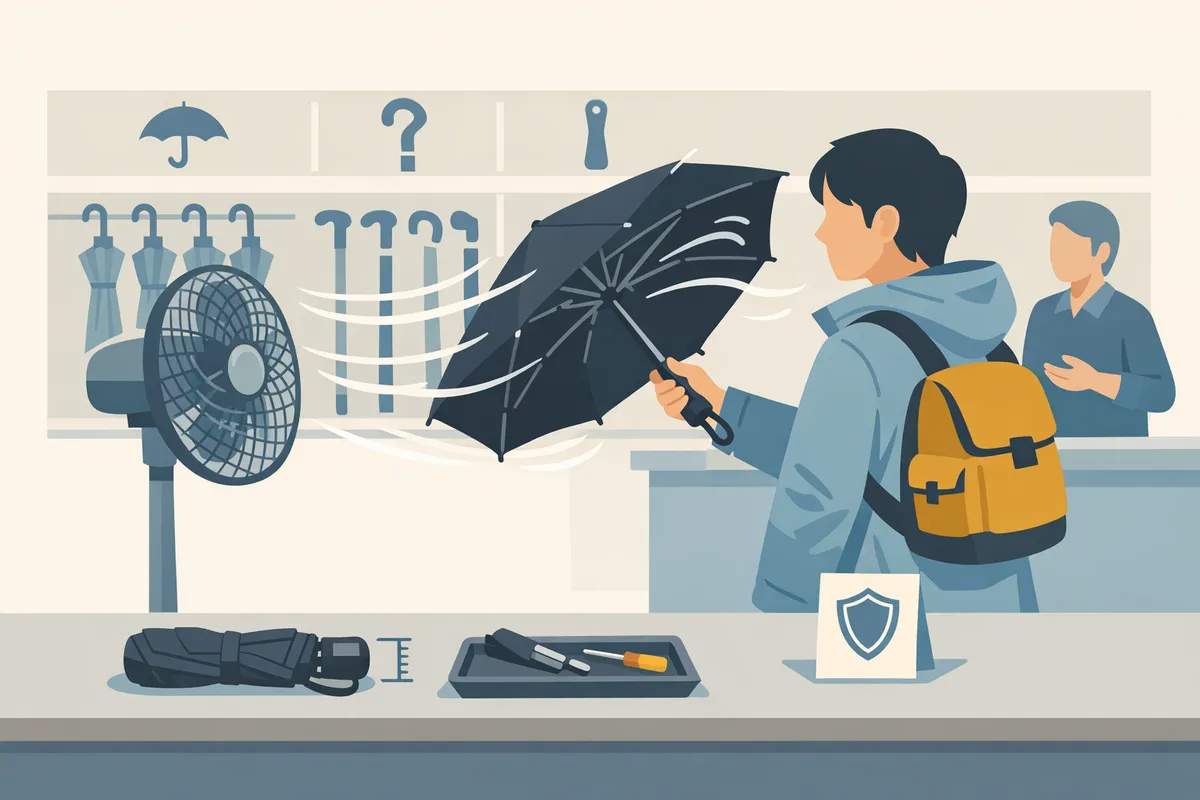
- Open/close cycle test: Open and close the umbrella 15–20 times to reveal sticky runners or weak catches. If it sticks or jams repeatedly, set it aside.
- Rib flex test: With the canopy open, press down near the tip so the rib bends about 15 degrees and then releases; ribs should snap back without creaking or staying bent. Fiberglass and hybrid ribs usually rebound better than plain steel.
- Simulated gust test: Use a fan or stand near a building exit and hold the umbrella into a cross-breeze; a quality commuter umbrella should return to shape or invert and pop back without permanent bends.
- Timed open check: An auto-open mechanism should deploy in under 3 seconds from a handheld folded position. If it takes longer, it costs you time boarding trains and buses.
- Wet-dry check for canopies: Spray the canopy for 30 seconds and time how long it takes to shed most water; fast-beading fabrics and tight stitching dry faster and reduce drip into bags. These tests expose weak ribs, sticky runners, and slow mechanisms that cause daily commuting failures. Better Canes Umbrellas are included in our test guidance so you can compare real-world handling across models.
Pricing, warranty, and service considerations 💳
Compare the upfront price to expected lifetime cost by factoring in warranty length and repair options.
- Longevity math: Estimate how many months you need the umbrella to last. Multiply likely lifespan by replacement cost to see annualized cost. For example, a $50 umbrella lasting 24 months costs about $25 per year.
- Warranty and repairs: Ask whether the seller replaces ribs or offers canopy repair and whether shipping is paid for returns. A 1–2 year warranty reduces replacement frequency and total cost of ownership.
- Service access: Check whether the retailer ships replacement parts or offers local repair partners; having a repair option can keep a favorite umbrella in service for years.
💡 Tip: Before you buy, confirm the return window and whether the warranty covers wind damage; short return windows plus no repair options often mean you'll replace rather than fix.
Which commuter umbrella should I buy first and how do I prioritize features?
Prioritize canopy coverage and wind resistance for long exposed walks, and prioritize folded size and weight for crowded transit or bag carry. Match features to your exact route so you avoid wasted purchases and mid-commute failures. Below are route-based shortlists, style guidance, the case for Better Canes Umbrellas, and budget priorities to help you pick a first umbrella that actually fits your daily routine.
Best commuter umbrellas for city commuters: shortlists by route 🏙️
Match features to your route: coverage and wind resistance for open-street walkers; compact folded size for transit riders; reinforced frames for bike-plus-transit; and neutral styling for business commuters. Canopy coverage is a measurement that estimates the umbrella's open area and determines whether a briefcase or a full suit stays dry. Folded size is the collapsed length that matters for backpacks, briefcases, or side pockets.
- Open-street walkers. Choose a mid-to-large canopy (approximate arc 42 to 48 inches) and a reinforced frame. Example: a 44-inch canopy typically covers one adult plus a briefcase during a steady rain but adds 3–6 ounces compared with compact models.
- Mixed transit riders. Prioritize a compact fold (under 12 inches) and auto open/close for quick boarding. Tradeoff: smaller canopies mean less shoulder coverage in wind.
- Multi-modal (bike + transit). Pick a fiberglass frame with vented canopy panels and a wrist strap to prevent blown-away losses.
- Business commuters. Choose a matte or neutral canopy and a low-profile crook or straight handle to preserve a professional look while keeping reinforced ribs.
Each shortlist trades raw coverage for packability; pick the point on that spectrum that matches how long you spend exposed to weather.
Stylish commuter umbrellas with wind resistance: matching form and function 👔
You can keep a professional look and still get wind resistance by choosing matte canopies, low-profile handles, and reinforced ribs. Ribs are the structural spokes that support the canopy; reinforced ribs use stronger materials or extra cross-bracing to resist inversion. For business wear, favor muted tones such as navy, charcoal, or forest green rather than patterns that show water spots.
Practical style choices:
- Materials. Polyester or acrylic canopies with a DWR (durable water repellant) finish shed water quickly and dry faster on coat hooks.
- Handles. Wooden crook handles or slim rubber-coated straight handles look professional and reduce pocket bulk compared with oversized novelty grips.
- Details. Hidden auto-open buttons and low-contrast stitching maintain a clean silhouette without affecting performance.
Better Canes Umbrellas lists materials and rib construction on each product page so you can compare professional-looking models that also resist gusts.
Why pick Better Canes Umbrellas for daily commuting 🛍️
Better Canes Umbrellas shortens the selection process by offering clear specs, in-store comparison, and staff guidance that reduce purchase risk. Our product pages list canopy arc, folded length, frame material, and recommended commute scenarios so you can rule out mismatches quickly. Better Canes has operated since 2000 and pairs a curated commuter range with retail locations where you can test open/close action and handle feel before you buy.
Practical benefits for buyers:
- Save time. View side-by-side specs and pick models by route rather than guessing from photos.
- Lower risk. In-store staff can recommend a model if you describe walk length, transit type, and bag constraints.
- Ready-to-use options. Choose a pre-selected commuter lineup if you want a low-risk, immediately usable umbrella rather than assembling features piecemeal.
Budget priorities and where to spend more for durability 💰
Spend on frame quality and a reliable opening mechanism first; deprioritize decorative trims and novelty features when budget is limited. Frame failures and a jammed mechanism cause the most commute-time headaches and often require full replacement rather than repair.
Prioritization steps:
- Frame and ribs. Opt for fiberglass or steel with reinforced joints to reduce inversion and bending risks.
- Opening mechanism. Choose tested auto open/close systems for quick deployment and one-handed use, especially for transit entries.
- Canopy fabric and finish. A DWR treatment and tightly woven fabric improve water shedding and lifespan.
- Handles and extras. Pick the cheapest handle that feels comfortable; skip decorative tassels or nonfunctional accents.
💡 Tip: Test the open/close action in-store or on video before buying; a smooth mechanism saves minutes per week over the umbrella's life.
How do I care for, store, and extend the life of a commuter umbrella?
Regular rinsing of grit, full air-drying, and quick small repairs extend the usable life of commuter umbrellas. For example, removing salt and road grime after a coastal commute prevents corrosion that can seize hinges within months. Our product pages for Better Canes Umbrellas list folded dimensions and sleeve options to help you pick a model that fits your daily routine.
Maintenance checklist and quick fixes 🔧
A short, repeatable maintenance routine prevents stuck mechanisms and broken ribs. Follow this three-step weekly check if you use a commuter umbrella daily: rinse away visible dirt with cool water, open the canopy to air-dry fully before storing, and inspect the frame for loose screws or bent ribs. 1) Tighten visible handle or ferrule screws with a small screwdriver; a quarter turn often stops wobble. 2) Apply a tiny drop of light machine oil to pivot points only if movement feels stiff; excess oil attracts dirt. 3) Replace shredded canopy panels promptly; our Better Canes Umbrellas parts page shows replacement canopies for several compact models.
💡 Tip: Always let the canopy dry fully in an open position to avoid mold and odor.
Workplace and bag storage tips to avoid damage 🧳
Store damp umbrellas upright and contained to protect bags and office spaces. Place a wet commuter umbrella inside a sleeve or dedicated tray; this prevents water from soaking papers, electronics, or wool coats in lockers. For bag carry, choose compact styles that list folded length under 12 inches on our Better Canes Umbrellas product pages so the umbrella fits vertically in laptop bags without stressing zippers. At the office, keep a slim umbrella hook near your desk or a short umbrella stand under your coat rack to avoid leaning wet shafts across chairs.
When to repair vs replace your commuter umbrella 🔄
Repair a commuter umbrella when the canopy and most ribs remain straight and the mechanism opens and closes reliably. Fixable problems include a snapped rib that can be spliced with a ferrule sleeve, a detached handle, or a single torn panel. Replace the umbrella when multiple ribs are permanently bent and misaligned, the frame no longer holds tension, or the canopy has several irreparable tears. If you bought a compact model from Better Canes Umbrellas, check the specific model's replacement threshold on our site; we show which compact frames are designed for field repairs and which are lower-cost, replaceable units.
⚠️ Warning: Avoid forcing a jammed mechanism open; doing so risks permanent frame misalignment and may void warranty.
Further resources, warranty info, and where to buy 📄
Check the Better Canes Umbrellas warranty and repair resource pages before attempting major fixes. Our warranty page lists coverage for frame failure and manufacturing defects and shows typical timelines for claims. Use our commuter umbrella collection to compare compact dimensions, sleeve presence, and stated wind resistance so you choose one of the best commuter umbrellas for city commuters without guesswork. For parts or same-model replacement canopies, contact our customer support with your model number for guided next steps.
Frequently Asked Questions
This FAQ answers the most common commuter umbrella questions about size, wind performance, storage, repairs, and mechanism reliability. Each answer includes a clear recommendation or a simple test you can run today. Use these items to compare specs and to check product detail pages on Better Canes Umbrellas before you buy.
How compact should a commuter umbrella be for subway commuting? 📏
A folded length of about 10 to 13 inches typically fits backpacks and under-seat subway storage. Measure the internal height of your bag or locker first; if the vertical space is 12 inches, choose an umbrella with a folded length of 12 inches or less. Very small mini umbrellas under 9 inches often sacrifice canopy arc and rib strength, which costs you protection during longer walks. For an immediate fit test: measure the bag opening, note the folded length on the product spec, and then try a similar-sized umbrella in store or against your packed bag at home. Our Better Canes Umbrellas product pages list folded length so you can compare models quickly when shopping for the best commuter umbrellas for city commuters.
Are compact umbrellas durable in strong wind? 💨
Compact umbrellas can withstand moderate gusts when they use flexible fiberglass ribs and a vented canopy design. Check product specs for frame material and canopy venting rather than judging durability by folded size alone. At-home durability checks include opening the umbrella, holding the shaft center, and gently applying sideways pressure to the canopy to see if the ribs flex and return without cracking; models that flex rather than snap indicate better wind tolerance. For commuters who need protection on exposed routes, look for umbrellas described as having reinforced tips, eight ribs or more, and a vented second layer; our Better Canes Umbrellas descriptions highlight these features so you can compare stylish commuter umbrellas with wind resistance.
How much canopy arc do I need to keep a backpack dry? 🎒
An arc of at least 42 inches generally covers a person plus a small backpack. If your bag is larger than 12 inches wide, choose a 48-inch arc or more to keep shoulders and pack dry during long walks. To pick the right size: measure your backpack width laid flat, add 6 inches for shoulder clearance, then match that total to the umbrella arc listed in the specs. If you frequently walk with a second person or a large messenger bag, prioritize arc over the smallest folded length; Better Canes Umbrellas catalog shows arc measurements clearly so you can choose the right balance of coverage and portability.
Are automatic open umbrellas reliable for daily use? ⚙️
Automatic open umbrellas add convenience but can fail sooner if the mechanism uses low-quality parts. Test the mechanism before purchase by opening and closing the umbrella at least 10 times to feel for smooth action and consistent return to the closed position. Also check the product warranty and look for reinforced button housings on the spec sheet; a longer warranty suggests the manufacturer expects the mechanism to hold up under daily use. If you travel through crowds or pack the umbrella in a tight bag, consider models with a recessed or lockable button and confirm coverage details on Better Canes Umbrellas product pages.
How should I dry and store a wet umbrella in an office? 🧺
Air-dry the umbrella fully before folding and store it upright in a sleeve or stand to prevent mildew and protect other items. Steps you can follow today: open the umbrella and rest it over a coat hook or lay it open on a low rack; allow 1 to 4 hours depending on fabric; once dry, fold it and slide it into a sleeve or upright stand. Our product pages indicate whether a protective sleeve is included so you can buy models that arrive ready for office storage.
⚠️ Warning: Do not store a wet umbrella folded inside a desk drawer or bag; trapped moisture causes mildew and can damage papers and electronics.
If your office lacks a stand, keep a small absorbent towel in a tray where wet umbrellas rest to collect drips and speed drying.
Does Better Canes Umbrellas offer repairs or warranty coverage? 🛠️
Better Canes Umbrellas provides product support and warranty information on our website and offers repairs for eligible models through customer service. To check coverage, open the product detail page for your model, note the stated warranty or support policy, and keep your proof of purchase. For repair requests, contact our customer service with photos and the model name; common repairs we support include replacing broken ribs, fixing snapped shafts, and addressing mechanism faults when covered by warranty. If a repair is out of warranty, we will provide a cost estimate and an honest recommendation about repair versus replacement based on the quoted labor relative to the umbrella's retail price.
How to pick the right commuter umbrella for daily city use.
The core takeaway: choose a compact, wind-resistant umbrella that fits your bag, closes reliably, and stands up to gusts. Prioritize a vented canopy, reinforced ribs, and a folded length under 14 inches to carry comfortably. Check handle grip and weight; sub-1-pound models usually balance durability and convenience. When comparing commuter umbrellas, test the open/close mechanism and confirm a straightforward warranty or replacement policy.
Better Canes & Umbrellas Inc., founded in 2000 and based in Chatham, NJ, is an online and retail seller focused on umbrellas, walking sticks (including novelty sticks and hiking sticks), and shoe horns. Our site highlights their long-running assortment that blends practical commuter pieces with fashion-forward or collectible options, helping you find weather protection or a gift in our uncategorized buyer's guides. Contact Better Canes & Umbrellas to request personalized recommendations or ask about model availability for your daily route.