
Best Walking Cane for Balance and Stability
Best Walking Cane for Balance and Stability
One in four adults over 65 falls each year, and choosing the best walking cane for balance and stability can reduce fall-related injuries and recovery time. The best walking cane for balance and stability is a mobility aid that prioritizes ergonomic handles, broad non-slip tips, and adjustable height to improve stance and gait. At Better Canes & Umbrellas Inc. (Better Canes Umbrellas), founded in 2000 and based in Chatham, NJ, our catalog includes commuter umbrellas, supportive Walking Canes, novelty canes, and distinctive shoe horns for daily use and gifting. This 10-item roundup for 2026 compares models across stability, handle comfort, tip grip, weight, and customer ratings to recommend options for commuters, hikers, collectors, and seniors. Which cane offers the best balance without sacrificing style?
Which cane types provide the best balance and stability?
Quad canes provide the best overall lateral stability for most users who need steady support during standing transfers and slow indoor walking. Quad canes matter because base width, handle shape, and tip traction directly affect how stable a cane feels on tile, hardwood, and low-pile carpet. Better Canes Umbrellas stocks quad and single-point options and walking sticks for seniors with extra grip support to help match those features to real needs.
Quad vs single-point vs hiking sticks 🦯
Quad canes generally offer the widest base and best lateral stability; single-point canes trade base width for lower weight and easier storage, and hiking sticks provide the best traction off-trail and on steep or uneven ground. A quad cane is a walking aid that has a four-point base that spreads weight across a larger surface, improving lateral steadiness during transfers. A single-point cane is a walking aid that uses one rubber tip to assist balance while remaining lightweight and easy to carry. A hiking stick is a walking stick that has a long shaft and aggressive tip designed for outdoor traction on roots, rock, and mud.
Table: how the common cane types compare for shoppers searching for the best walking cane for balance and stability and for walking sticks for seniors with extra grip support.
| Cane type | Base stability | Typical weight | Height range | Best use case | Price range |
|---|---|---|---|---|---|
| Quad cane | Highest for flat indoor surfaces and lateral support | 1.5–2.5 lb | 30–38 in adjustable | Transfers, indoor walking, standing up from chairs | $30–$120 |
| Single-point cane | Moderate; better for minor balance needs | 0.5–1.2 lb | 32–37 in adjustable | Travel, tight spaces, short walks | $20–$80 |
| Hiking stick | Variable; depends on tip and wear | 1–2 lb | 34–39 in (fixed or adjustable) | Trails, uneven terrain, steep inclines | $25–$150 |
Choose a quad cane if you need help with lateral sway during transfers or moving through crowded rooms. Choose a single-point cane if you want something light for errands and easy storage. Choose a hiking stick when you plan extended outdoor walks on trails with roots, gravel, or sudden grade changes. Better Canes Umbrellas offers folding quad canes and compact single-point models to reduce the portability tradeoff while keeping stability options visible.
What handle types and cane tips improve grip and stability? 🖐️
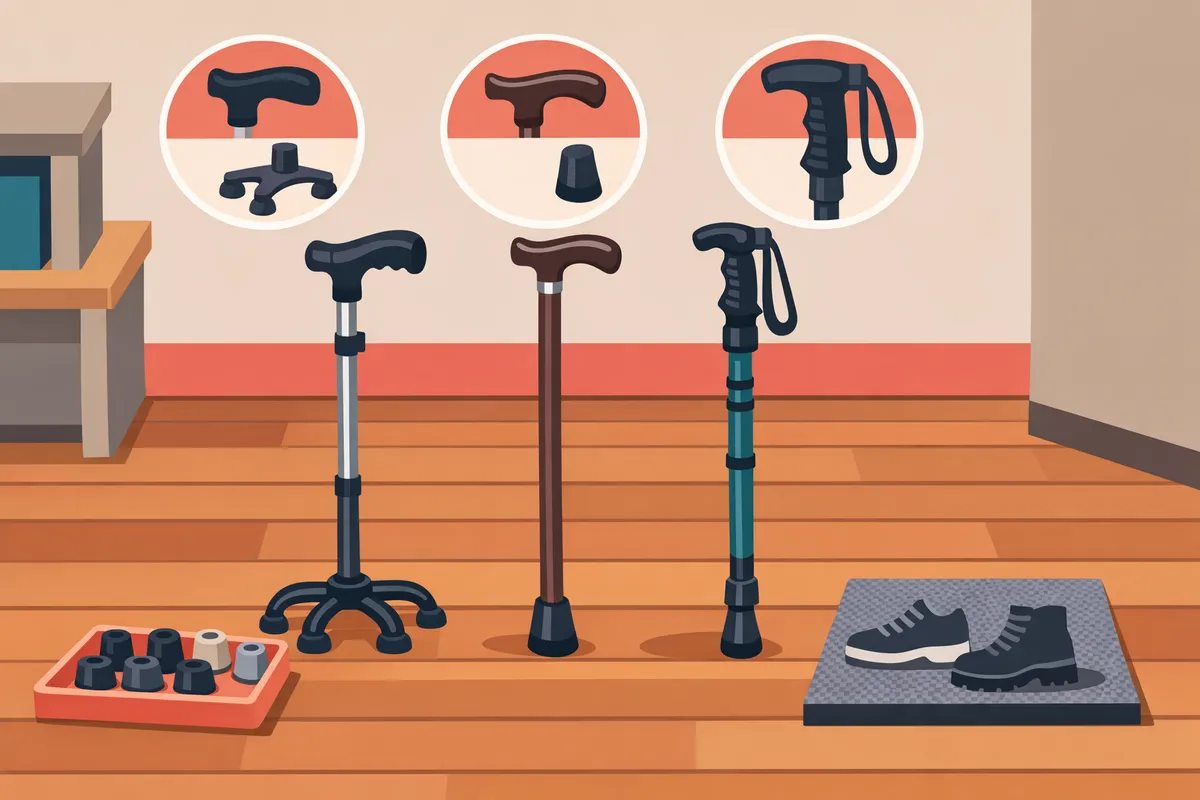
An ergonomic handle that matches the palm plus a high-traction rubber or multi-point tip reduce slipping and hand fatigue most effectively. Derby handles are a handle style that allows gentle weight transfer through the wrist and works well for users who push down through the cane. Offset handles are a handle style that keeps the wrist neutral and reduces pressure for people with wrist pain or mild arthritis. Molded ergonomic grips are a handle style that contours to the palm and lowers localized pressure during longer walks.
Tip selection matters as much as handle choice. Wide rubber tips provide stable contact on indoor floors and reduce the chance of catching on thresholds. Multi-point tips (small flanges or multiple contact points) give better purchase on grass and gravel. Metal or carbide tips increase bite on ice but accelerate wear on indoor surfaces and require a sleeve or removable rubber cover for indoor use.
- Test handle fit: stand upright with shoes on, let your arm hang; the cane handle should sit at the wrist crease so your elbow bends roughly 10–20 degrees when holding the grip.
- Match tip to terrain: choose wide rubber tips for tile/wood floors, multi-point tips for lawn or gravel, and interchangeable tips if you switch environments often.
- Check wear monthly: replace tips when the tread looks flattened or you notice slipping.
💡 Tip: Inspect and replace worn rubber tips every 3–6 months for frequent users, sooner if you notice uneven gait or slipping.
Better Canes Umbrellas lists derby, offset, and molded grips alongside replacement cane tips so shoppers can pair the grip they test in-store with the correct tip for their regular routes.
Which specific canes should you consider for balance and stability in 2026?
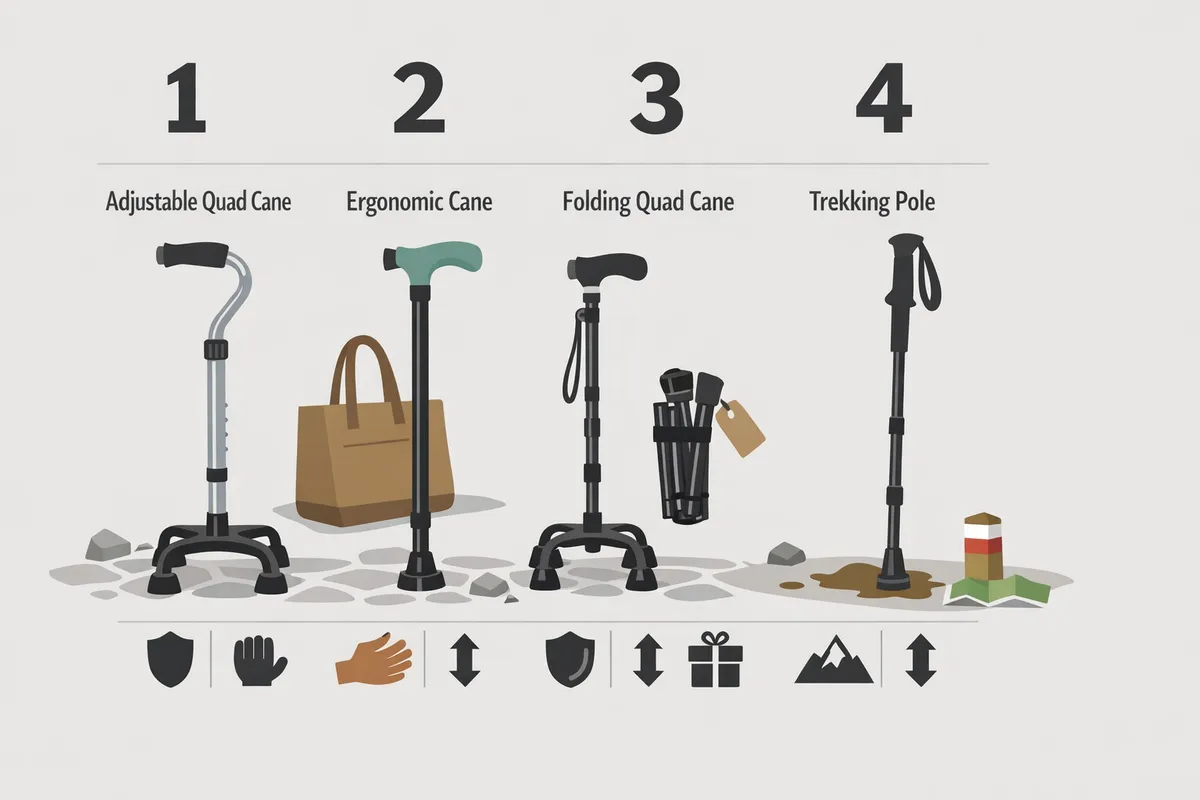
Choose a cane that matches the user’s primary need: wide-base adjustable quad canes for maximum lateral support, ergonomic handles for hand pain, high-traction sticks for weak grips, folding quads for travel, and trekking sticks for uneven ground. These ranked categories focus on real use cases so you can compare stability, grip, and adjustability quickly. Better Canes Umbrellas organizes its assortment around these use cases to make side-by-side comparison fast and practical.
Best overall for balance: Adjustable quad cane 🦯
An adjustable quad cane provides the widest lateral support plus height flexibility for most balance deficits. Look for a four-point base with a low center of gravity, an easily adjustable shaft with clear height increments, and an ergonomic grip that reduces wrist torque. For heavier users, choose models rated for higher capacity (many supportive quad canes list a 300–350 lb range); confirm the cane’s rated capacity before purchase. Better Canes Umbrellas stocks adjustable quad canes with replaceable wide tips and heavy-duty shafts so shoppers can pick a model that fits both indoor transfers and slow, steady walking. Before buying, measure from wrist crease to floor while standing in shoes to verify the cane’s height range will fit you.
💡 Tip: Measure height while wearing the shoes you usually walk in. That prevents buying a cane that sits too low or too high during daily use.
Best for hand pain or arthritis: Ergonomic-handle cane 🖐️
An ergonomic-handle cane spreads pressure across the palm and reduces peak force on painful or numb hands. Prioritize molded palm grips or anatomic handles made from softer materials like dense foam or thermoplastic elastomers; look for a slightly forward-swept grip to keep the wrist neutral. Test a handle by holding it for 60 seconds while standing: any pins-and-needles or sharp pressure spots mean try a different shape. Better Canes Umbrellas’ ergonomic cane handles collection includes several molded shapes and cushion options so shoppers can match grip geometry to hand morphology and neuropathy concerns.
Best for seniors who need extra grip support: High-traction walking stick 🧓
A high-traction walking stick with an oversized textured grip and a wide rubber tip reduces slips and helps users who have weak hand strength. Choose grips with coarse texture or molded finger contours and a shaft that accommodates a larger-diameter handle for easier wrapping of the hand. For tips, prefer replaceable rubber heads with tread patterns or multi-surface soles; tips in the 1.25–2.0 inch range give more contact area on tile and linoleum. If you search for walking sticks for seniors with extra grip support, look for models that pair an oversized grip with a broad, replaceable tip to reduce slip risk on wet or polished floors. Better Canes Umbrellas curates extra-grip walking sticks specifically for slippery indoor surfaces and reduced-hand-strength users.
Best travel option: Folding quad or quick-collapsible cane ✈️
A folding quad cane keeps much of the quad base stability while collapsing for easy transport through transit and airports. Evaluate locking mechanisms for positive engagement, confirm the folded length and carry weight match your luggage constraints, and practice one-handed setup so you can deploy the cane quickly at security checkpoints. Folding quads vary in folded size and hinge durability; choose a model with a sturdy locking collar rather than a push-pin that can loosen under repeated folding. Better Canes Umbrellas lists folding quad canes with user-tested locks and compact folded profiles so commuters and frequent travelers can compare portability without sacrificing base stability.
Best outdoor stability: Trekking-style walking stick with shock-absorbing tip 🥾
A trekking-style walking stick with a reinforced shaft and shock-absorbing tip performs best on uneven trails, curbs, and cracked sidewalks. Look for a durable shaft material such as aircraft-grade aluminum or carbon composite, an adjustable clamp for quick height changes on slopes, and a removable carbide or tungsten tip with a rubber sleeve for mixed surfaces. For regular outdoor walkers, a short travel test on gravel and pavement will reveal whether the tip absorbs impact and maintains traction. Better Canes Umbrellas’ hiking sticks for stability include reinforced shafts and swap-out tips so you can tailor grip and shock absorption to your local terrain.
Best budget pick: Value quad cane with replaceable tips 💲
A value quad cane offers essential lateral stability at lower cost when you confirm fit and tip compatibility before buying. Check that the cane’s height adjustability covers your measured wrist-to-floor distance, ensure the base width matches your stability needs, and confirm the tips are replaceable so wear does not force an early replacement of the entire cane. Cheap models sometimes use thin shafts that twist under load; choose rust-resistant finishes and modestly thicker-wall tubing to avoid premature wear. Better Canes Umbrellas carries budget quad canes with documented replacement-tip sizing so shoppers can replace worn tips instead of replacing a whole cane.
Best for style plus support: Fashionable quad or decorative walking stick 🎩
A fashionable cane can provide support only if its shaft, base, and tip meet rated load and tip-durability requirements. Many novelty or collectible sticks use decorative materials that look sturdy but lack a properly sized base or rated capacity; verify the manufacturer’s support rating, confirm the tip is replaceable, and test stability on the surfaces you use most. If you prioritize appearance, choose a decorative model built on a quad or reinforced shaft rather than a slim novelty shaft. Better Canes Umbrellas offers decorative walking sticks and some collectible quad models that list support characteristics so style does not come at the cost of safety.
How Better Canes Umbrellas simplifies choosing the right cane 🛍️
Better Canes Umbrellas groups walking sticks by use case so shoppers can compare quad-cane stability, ergonomic handles, travel-ready folding options, and hiking sticks in one place. Operating since 2000, our assortment spans budget quads to decorative collectors and includes clear product descriptions, tip sizes, and height ranges to reduce guesswork. Use the site filters to narrow by base type, handle material, and replaceable-tip size; if you have doubts about fit, contact our customer service to confirm the proper height range and tip compatibility before purchasing.
Which cane fits my needs and how do I test and fit it before buying?
Match a cane to your balance profile, daily routes, and hand comfort using a three-question decision tree and a short at-home fit test. A decision tree is a simple three-question flow that matches cane type to primary use (indoors vs outdoors), hand support needs, and portability. Our approach reduces time and guesswork; Better Canes Umbrellas, founded in 2000, stocks options that map to each outcome so you can move from test to purchase quickly.
How to measure cane height and check fit 📏
Set cane height so the wrist rests at a natural angle when standing with arms relaxed, creating roughly 20 to 30 degrees of elbow flexion. Follow these steps exactly while wearing the shoes you use most often.
- Stand upright in your usual shoes and let the arm on the cane side hang naturally.
- Measure from the wrist crease (where your hand meets the arm) straight down to the floor.
- Adjust the cane so its top aligns with that measurement. Most adjustable canes use a push-button or collar; set the locking hole that matches the measured length.
- Confirm standing posture: your shoulder should stay level and the elbow should bend about 20 to 30 degrees when holding the cane handle comfortably.
Our testing notes: a cane set 1 inch too short shifts weight to the opposite leg and increases fatigue; a cane 1 inch too long causes shoulder shrugging and uneven gait. Better Canes Umbrellas lists handle styles (T-handle, derby, ergonomic) by measured height so you can pick the right shape as well as the right length.
💡 Tip: Try the cane with the shoes you wear most often to get an accurate feel for height and balance.
How to test stability, grip, and comfort at home 👟
Test a candidate cane by walking a few indoor laps, performing sit-to-stand transfers, and stepping over a low threshold while wearing your typical shoes. Use this short checklist and spend 5 to 10 minutes per item.
- Walk three 30-second laps at your normal pace in the rooms and corridors you use daily. Note lateral wobble and how often you correct balance.
- Do five sit-to-stand transfers from a chair of the height you normally use. Check whether the cane reduces push-off effort or causes hand pain.
- Step up and down a 1–2 inch threshold or doorstep to test tip traction and slip resistance.
- Grip trial: hold the handle for 3 minutes while reading or carrying a small bag to see if hand numbness, pinching, or slippage appears.
Example decision outcome: if you struggle with lateral sway during laps, a wide-base quad from Better Canes Umbrellas is appropriate; if you have hand arthritis, choose an ergonomic handle they carry designed for pressure redistribution.
When to consult a clinician or therapist 🩺
See a physical therapist when you experience frequent near-falls, new pain with cane use, or changing balance that affects daily activities. A clinician provides a clinical gait assessment that pinpoints whether you need a different cane type, gait training, or assistive-device progression.
What to expect from a visit: the therapist will observe walking patterns, measure height and weight-bearing asymmetry, and recommend a cane type (single-point, offset, or quad) plus handle style. Bring the cane you plan to purchase or a shortlist from Better Canes Umbrellas so the therapist can advise on specific models and any required modifications.
Clinical referral example: for progressive neuropathy, a therapist may recommend walking sticks for seniors with extra grip support and instruct on placement timing (opposite hand, step pattern) to reduce fall risk.
Replacement tips, maintenance, and accessory recommendations 🔧
Replace worn rubber tips promptly, tighten adjustable collars periodically, and consider a wrist strap or foam grip for extra security. Regular simple maintenance prevents slips and extends safe use.
- Weekly quick check: inspect the rubber tip for uneven wear and the handle for tears.
- Monthly upkeep: tighten height collars and test the push-button lock for play.
- Accessories to consider: wrist strap for hands that fatigue, foam or gel grips for arthritis, and a high-traction replacement tip for slick surfaces.
- Replacement sources: search for replacement cane tips and cane accessories that match your cane shaft diameter (common sizes are 7/8 inch and 1 inch).
⚠️ Warning: Replace worn rubber tips immediately to avoid slips on smooth surfaces. Better Canes Umbrellas offers matching replacement tips and accessory options so you can keep the same cane safely in service.
Frequently Asked Questions
These FAQs answer the precise fitting, safety, and selection questions buyers ask when choosing the best walking cane for balance and stability. Our product selection at Better Canes Umbrellas reflects these priorities, with quad canes, single-point options, and novelty sticks sorted by base type and handle style.
How do I choose the best walking cane for balance?
Choose a cane that matches your specific balance deficit, preferred base width, and handle comfort. Measure wrist-to-floor height while wearing your usual shoes, then match that measurement to an adjustable model. If you have lateral instability or worry about side-to-side sway, test a wide-base quad cane; if your balance issue is mild and you want lighter weight or easier storage, try a single-point cane. Our Better Canes Umbrellas product pages label base type and recommended use so you can narrow options quickly.
Are quad canes better than single-point canes for seniors? 🤔
Quad canes generally provide more lateral stability than single-point canes for seniors with balance deficits. Quad bases increase the support footprint for standing transfers and slow indoor walking. Single-point canes suit users who need modest support, prefer lighter weight, or must store the cane in tight spaces. Better Canes Umbrellas offers both folding quad canes for home use and compact single-point sticks for commuting.
What is the correct height for a walking cane? 📏
Set the cane so your wrist rests in a neutral position with about 20 to 30 degrees of elbow flexion while standing in your usual shoes. To measure, stand relaxed, let your arm hang at your side, and measure from the wrist crease to the floor; adjust the cane to that height and lock it securely. After adjusting, test with a short walk and a sit-to-stand transfer to confirm shoulder and wrist comfort. Many adjustable models at Better Canes Umbrellas include simple twist locks or push-pin adjustments for easy in-store fitting.
Can novelty canes be safe for balance support? 🎩
Some novelty canes can provide adequate support, but only if they have a rated weight capacity, a stable tip, and a solid shaft construction. Inspect the product for listed load limits, check that the tip is rubber or high-traction material, and avoid hollow decorative shafts that flex under load. Our Better Canes Umbrellas novelty sticks carry clear support ratings and tip specifications so buyers know whether a design is suitable for balance tasks or only decorative use.
How should I test grip comfort and tip traction before buying? 🧪
Try the cane on a short indoor route, perform a sit-to-stand transfer, and step up or down to confirm handle fit and tip grip on surfaces you use most. The handle should fill your palm without pinching; try foam, gel, and ergonomic grips to see which reduces hand pain. Test the tip on tile, hardwood, and outdoor concrete if you use those surfaces regularly; a tip that slips on one surface often indicates a poor match for your routes. Better Canes Umbrellas lists grip materials and tip types so you can compare options before purchase.
💡 Tip: Bring the shoes you wear most when testing cane height and comfort; heel height changes the correct cane length.
Do walking sticks for seniors with extra grip support require special maintenance? 🛠️
Maintenance is straightforward: replace worn tips promptly, clean or replace foam grips when they compress, and verify adjustment locks regularly. Inspect rubber tips for uneven wear every 3 to 6 months depending on frequency of use and replace them when treads flatten to avoid instability. Keep an eye on shafts for dents or cracks; if you find structural damage, stop using the cane and replace it. Better Canes Umbrellas stocks replacement tips and grips so upkeep is simple.
⚠️ Warning: Do not use a cane with a cracked shaft or a loose adjustment lock; both increase fall risk.
Choose a cane that provides stable footing and a secure grip for daily use.
The core takeaway: pick the model that matches your gait, typical shoes, and the surfaces you use most. From this roundup, two clear winners stand out — an adjustable quad cane for maximum base support, and an ergonomic single-point cane for lighter weight and easier handling — each fits different lifestyles and balance needs. If you want the best walking cane for balance and stability, start by trying those two categories and focus on fit and confidence when you stand and walk.
💡 Tip: Bring the shoes you wear every day when testing a cane so you can judge real-world balance and comfort.
Better Canes & Umbrellas Inc., founded in 2000 and based in Chatham, NJ, is an online and retail seller focused on umbrellas, walking sticks (including novelty sticks and hiking sticks), and shoe horns. Schedule a consultation with Better Canes & Umbrellas to measure height, test grips, and match a top pick from our Walking Canes cluster to your daily routine.